
Symptom
Spray Foam Roof Over Metal Panels
Likely Cause
Corrugated panels leak at laps and screws and lose heat in winter.
What We Do
Panel attachment and corrosion are corrected, the surface is prepared, and foam fills over the ribs.
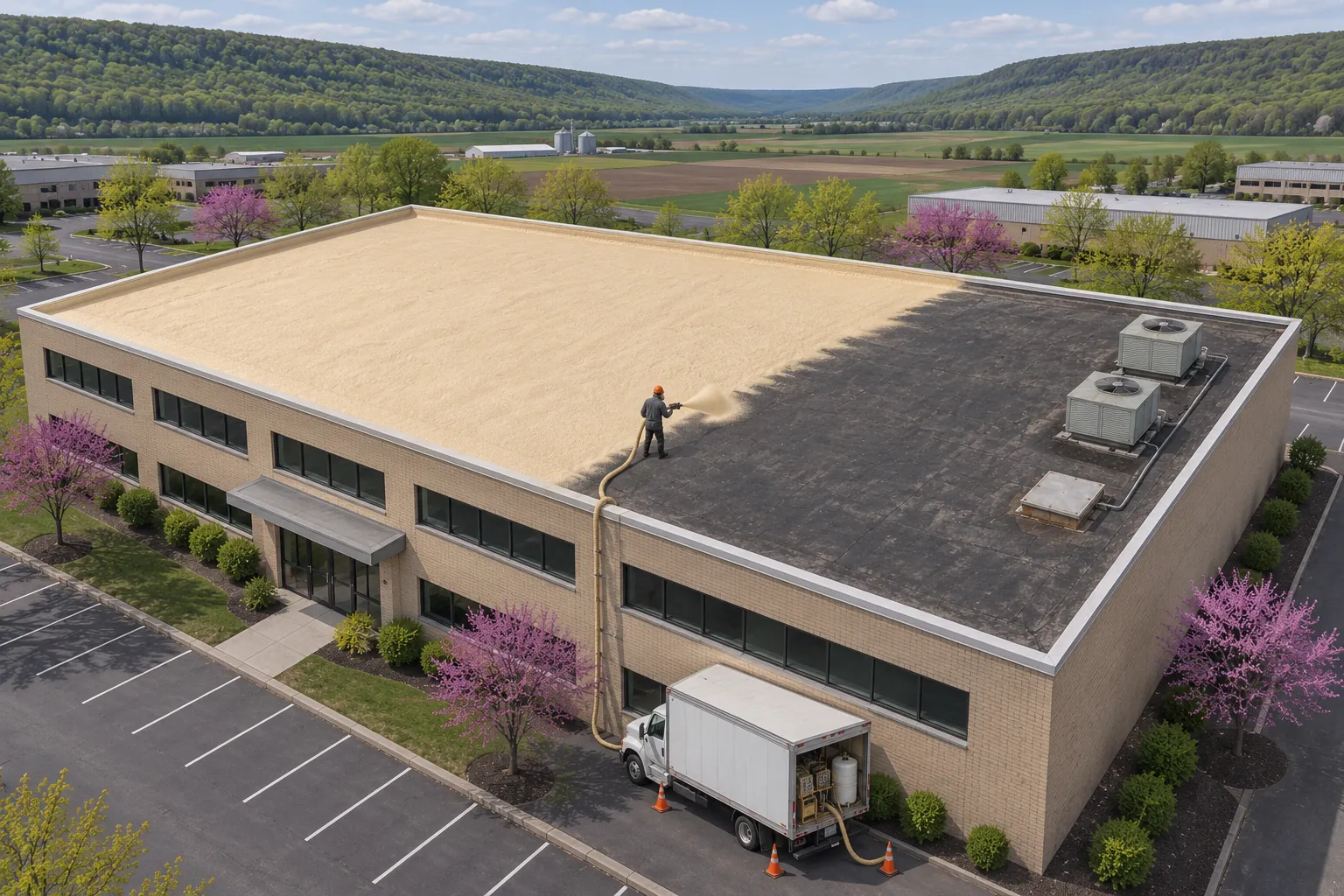
As a State College spray foam roofing contractor, we dry and prepare the roof, spray foam over metal panels or flat decks, and protect it with a topcoat.
State College spray foam roofing fits roofs that are dry, attached, and clear enough to control overspray. Match your roof below.
| What You See | Coat Now | Repair, Then Coat | Choose Another Route |
|---|---|---|---|
| Firm metal panels with secure attachment | Usually Fits | Sometimes | Rarely |
| Loose screws or hidden rust under panels | Rarely | Usually Fits | Rarely |
| Wet insulation under a flat roof | Rarely | Sometimes | Usually Fits |
| Busy air intakes and parked cars beside the roof | Sometimes | Usually Fits | Rarely |
| Winter condensation inside a farm building | Rarely | Sometimes | Usually Fits |
Condensation inside a building calls for a moisture plan; foam can be part of it, never the whole answer.
These signs decide whether foam is the right system and what has to happen before spraying.
Corrugated panels leak at laps and screws and lose heat in winter.
Panel attachment and corrosion are corrected, the surface is prepared, and foam fills over the ribs.
Water has entered the roof assembly through old openings.
We investigate moisture and remove wet material before foam goes down.
Warm, humid air inside meets cold metal and condenses.
Air movement and indoor humidity are reviewed, so foam fits into a broader moisture plan.
Rooftop units and sensitive intakes draw air from right beside the roof.
Intakes are protected or shut down in coordination with the building, and spray zones are planned.
Foot traffic and dropped tools damage the topcoat over time.
Routes are marked, and inspections after the work look for punctures and wear.
Foam is one option among several. These cards show when foam leads and when a coating alone is enough.
Foam follows panel contours within a designed system and adds an insulated layer across the roof.
A protective coating over the foam blocks sunlight; its type follows drainage and recoat plans.
Roofs that need sealing but no added insulation can take a coating system directly over prepared panels.
Loose connections and hidden corrosion are corrected first, because foam covers them without fixing them.
These pairs show what foam changes on a roof once the substrate is ready for it.
Uninsulated metal passes heat out in winter and into the building in summer.
Foam adds a continuous insulated layer across the whole roof surface.
Each lap and screw on an old panel roof is a joint that can open.
Sprayed foam covers those joints as one layer with no seams of its own.
Worn flashing and odd transitions leak again after spot repairs.
Foam builds up around details, then the topcoat seals the finished shape.
Removing an old roof sends material to the landfill and exposes the interior.
Foam goes over the prepared roof, which keeps the existing deck in place.
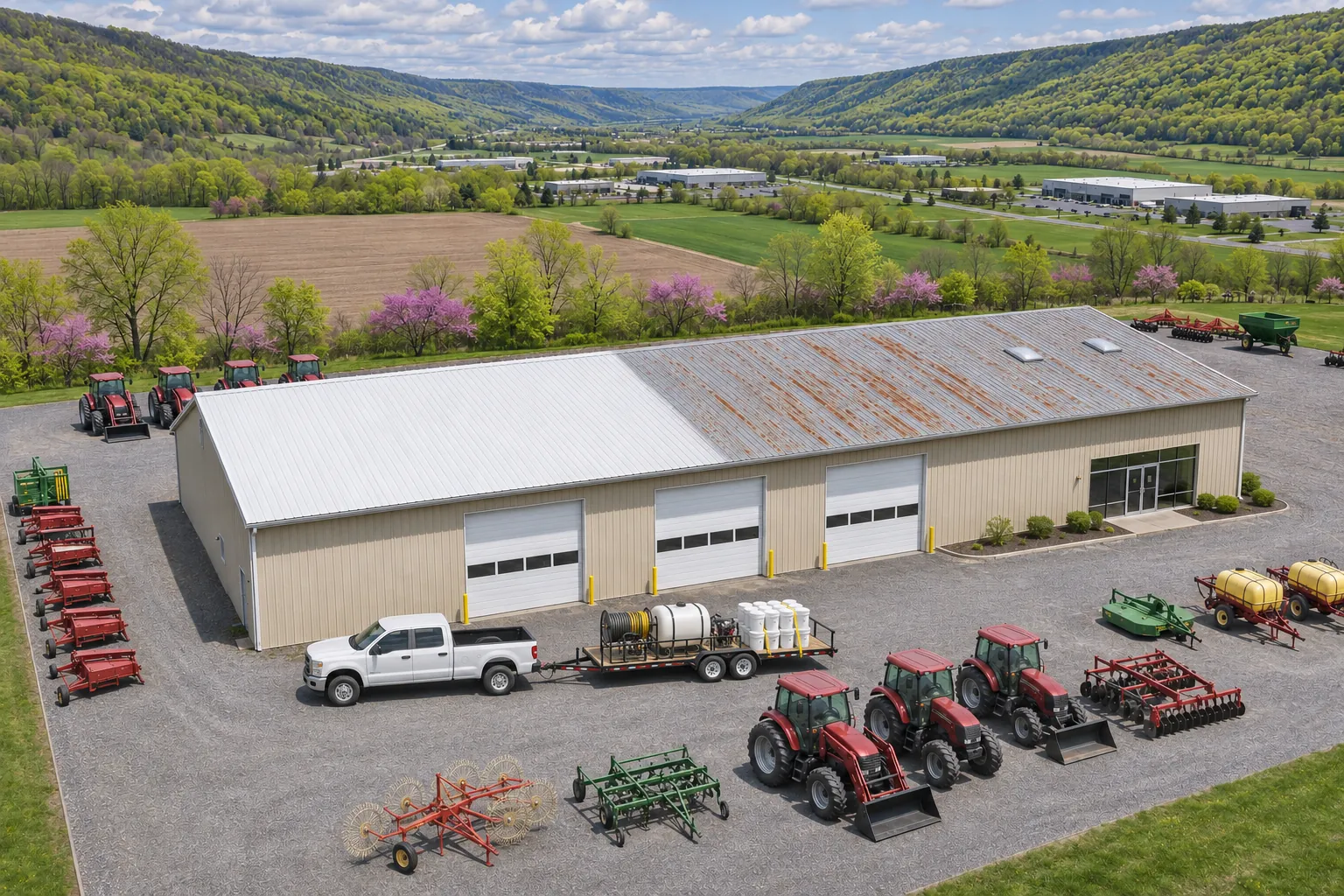
Foam adds insulation while it seals the roof. Get a ballpark range to compare it with other coating work.
Get A Free Ballpark EstimateFive decisions set up a foam job, and the first two happen before any equipment arrives.
We check panel attachment, corrosion, moisture in the assembly, and every intake and unit near the work area.
Wet insulation comes out, and surfaces are cleaned and prepared for the materials proposed.
Wind limits, protected intakes, covered rooftop units, and spray zones are planned with the building manager.
Foam thickness follows the designed system and the insulation goal, with slope toward drains kept in mind.
After cure, the topcoat is inspected, and later checks look for punctures and weathering along service paths.
Foam often shares a building with sections that need a different approach.
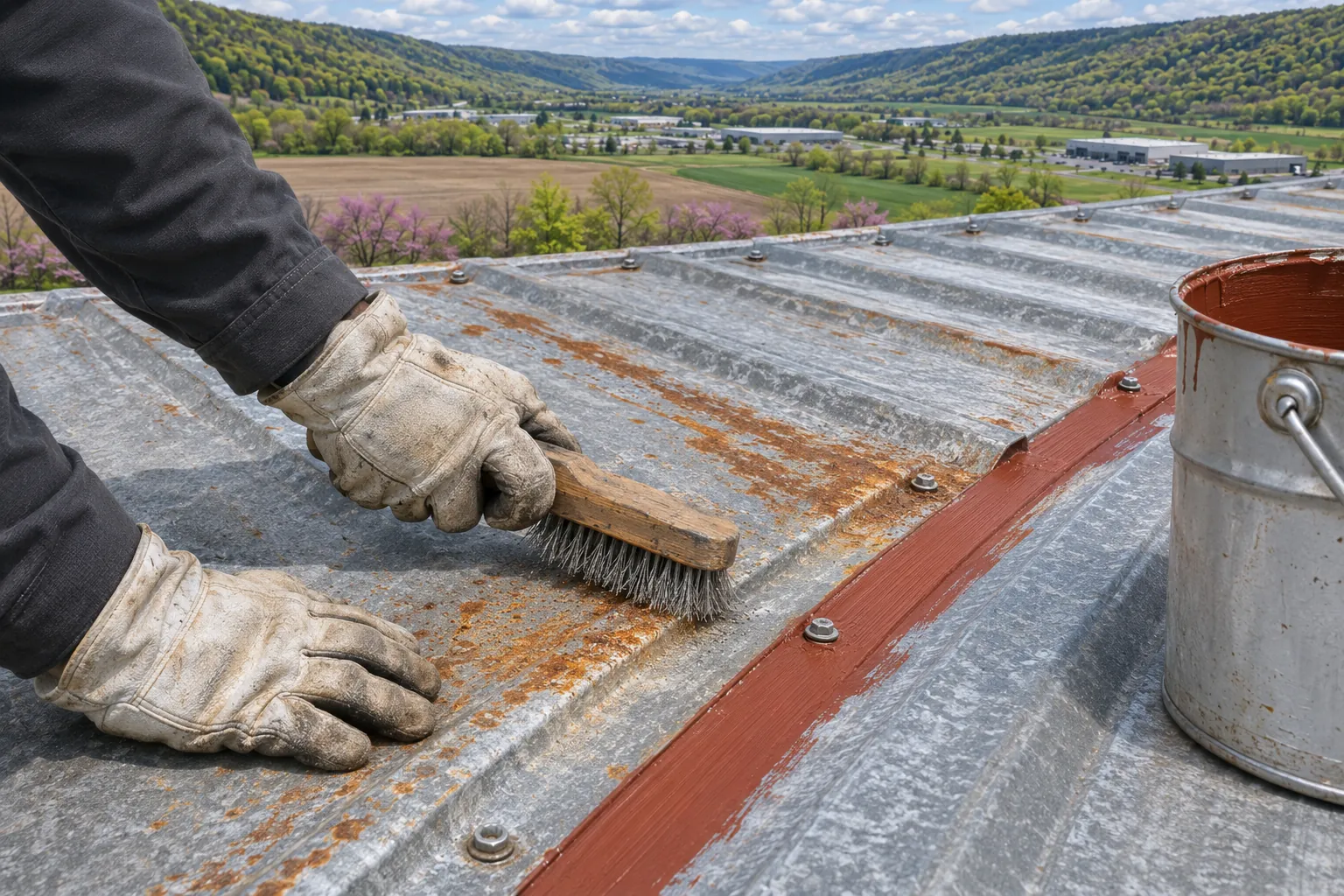
Metal sections left unfoamed get their screws, laps, and rust handled before coating.
Commercial Metal Roof Coating in State College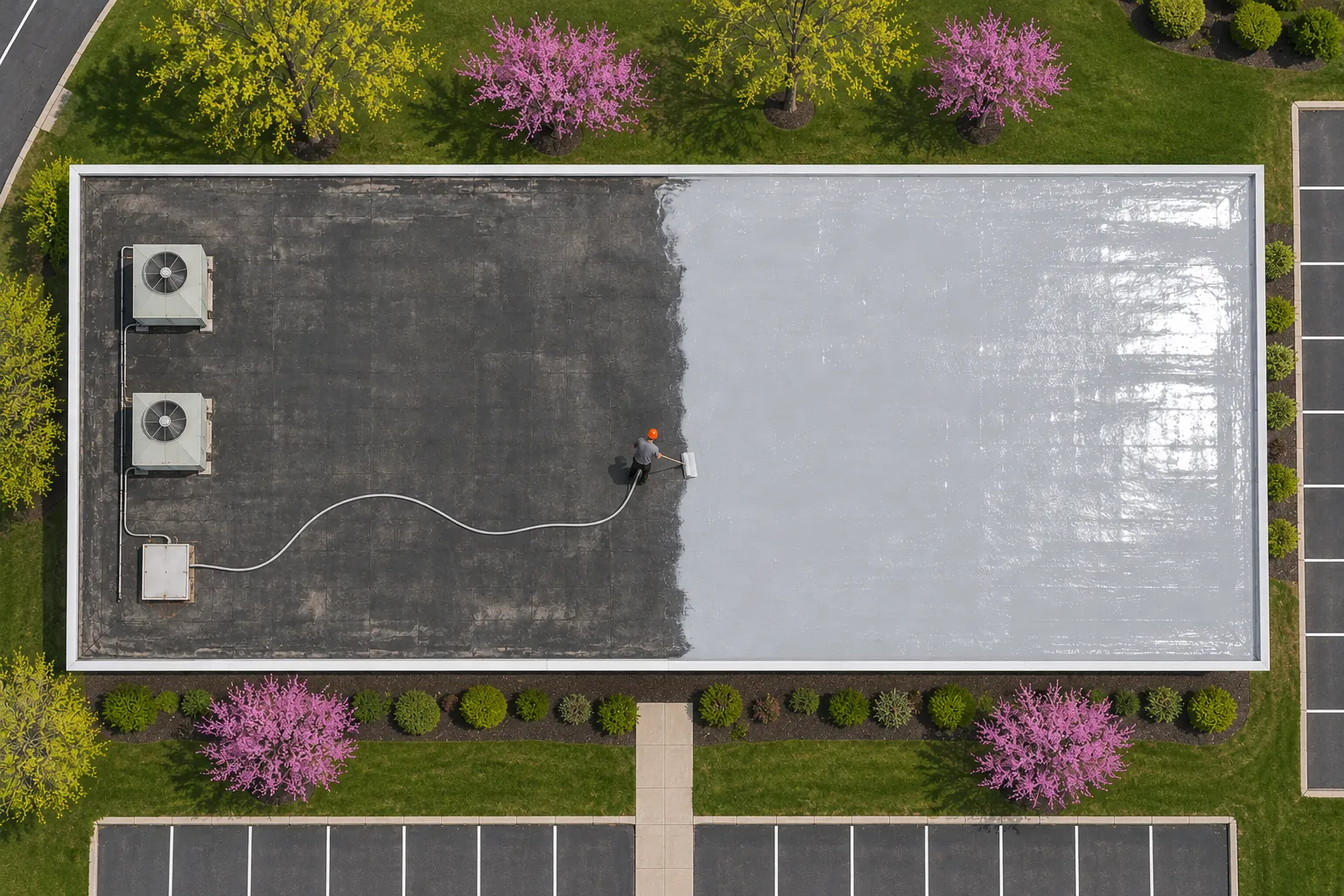
Silicone can serve as the foam topcoat or cover flat areas that stay wet.
Silicone Roof Coating in State College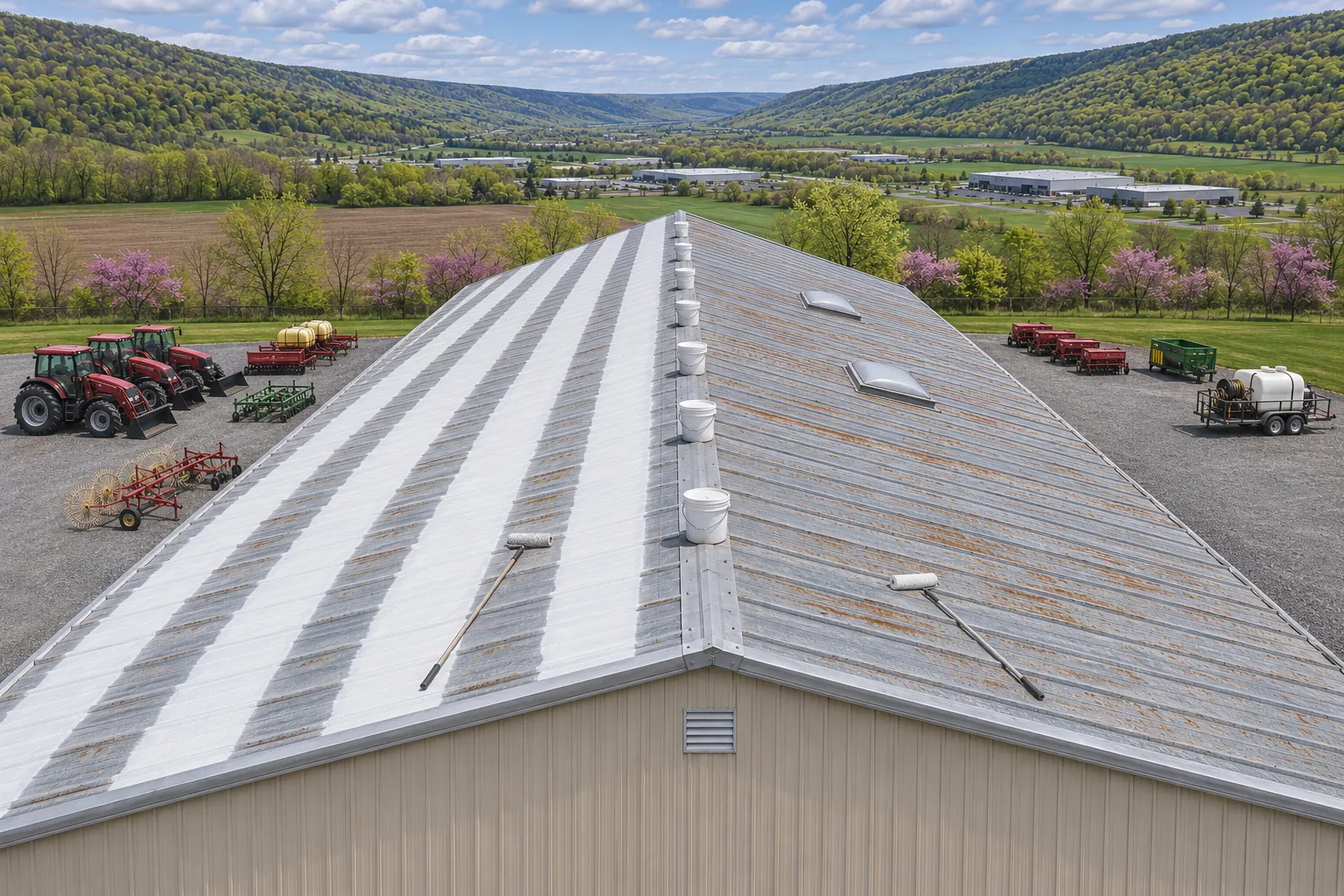
Acrylic suits foam topcoats on well-drained roofs and recoats easily later.
Acrylic Roof Coating in State College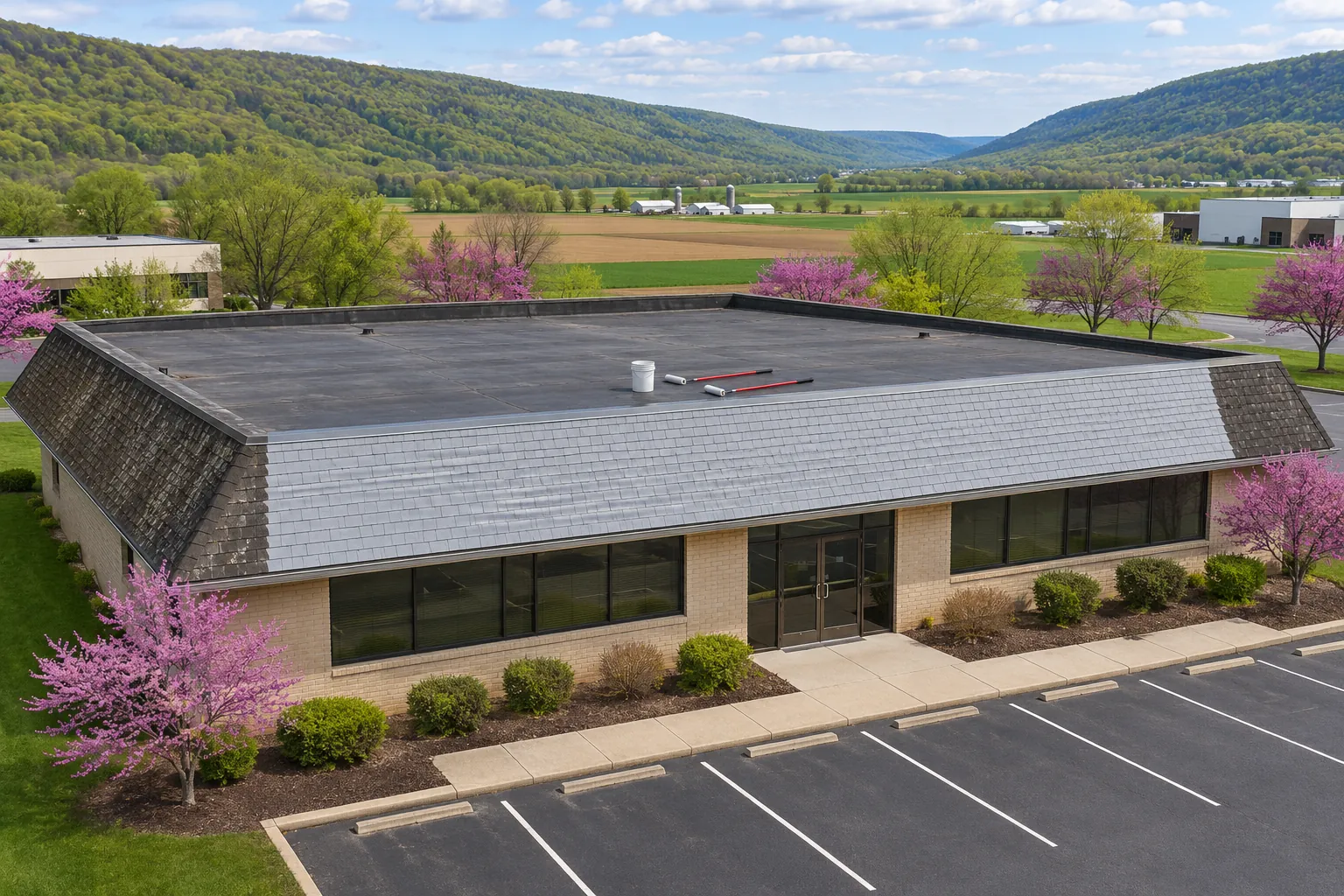
Shingle mansards around a foamed flat roof get their own compatibility check.
Shingle Roof Coating in State CollegeOn a fitting roof, foam gives a continuous surface, while application control and topcoat upkeep are the main tradeoffs. We review intakes, nearby equipment, and maintenance routes first, and the plan includes weather limits, overspray protection, and inspections for punctures afterward.
Sprayed foam follows panel contours inside a designed system, yet it hides whatever it covers. Panel condition and attachment are established and moisture investigated first, because loose connections or hidden corrosion would stay under the foam.
Foam can be part of an insulation plan, but winter condensation comes from the whole building. We review air movement, indoor humidity, and the existing roof first, since added insulation leaves the problem in place where warm, moist air still reaches cold surfaces.
Silicone or acrylic protects the foam from sunlight. Drainage and the recoat path decide which one fits your roof.
Only within the temperature and moisture limits of the foam system. Surfaces must be dry, and spring and fall dates move with the forecast.
Thickness follows the designed system and the insulation goal, and it can vary across the roof to move water toward the drains. We measure as we spray, build extra depth at low spots, and keep the finished surface smooth enough for the protective topcoat to cover evenly.
Yes, for normal service visits. Marked paths or walk pads near rooftop units keep boots and dropped tools from denting the foam, and the topcoat is checked after heavy service work so small punctures get sealed before water reaches the foam.
Get a ballpark range for your roof area, or call to check whether your building is a fit for foam.