Drips Along A Straight Line Of Screws
Washers have hardened and the screws have backed out or stripped their holes.
Loose screws are tightened or upsized with new washers, and the sealing waits until every connection holds.
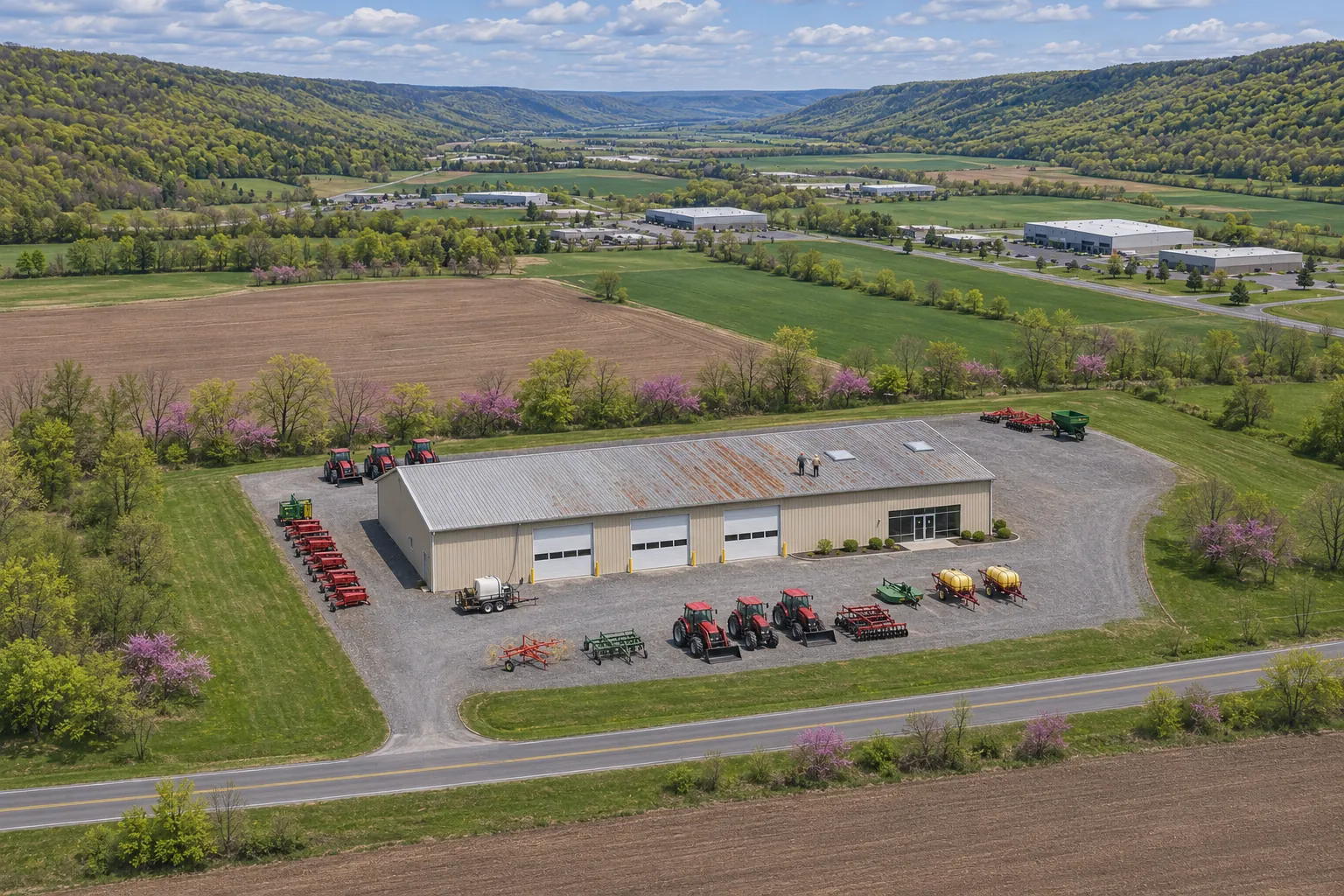
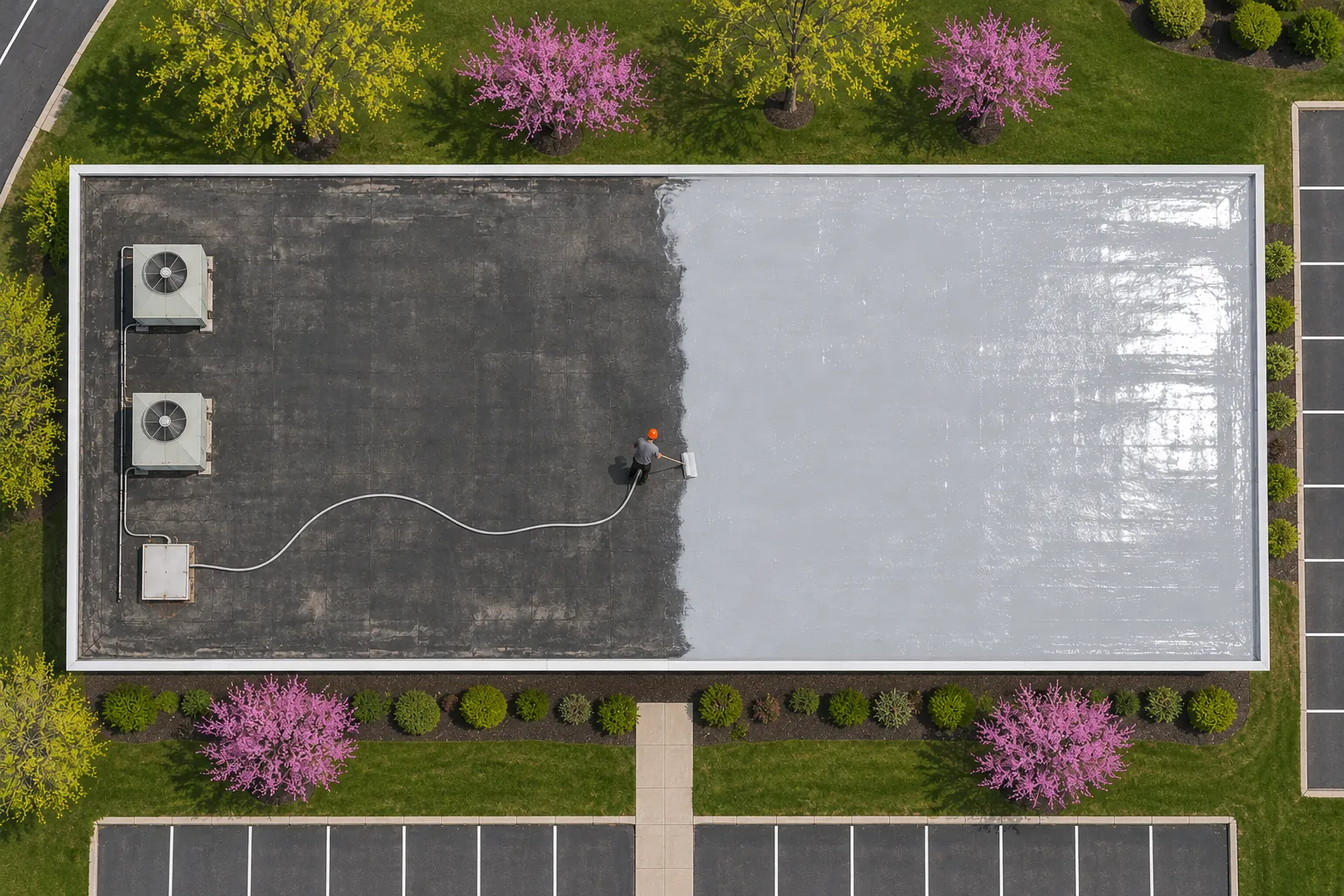
As a State College commercial metal roof coating contractor, we fix screws and laps, treat rust, and coat exposed-fastener steel on shops, offices, and farm buildings.
State College commercial metal roof coating suits steel that is still firm. Match what you see on your roof to the job that usually follows.
| What You See | Coat Now | Repair, Then Coat | Choose Another Route |
|---|---|---|---|
| Chalky finish on stiff, rust-spotted panels | Usually Fits | Sometimes | Rarely |
| Screws spinning in enlarged holes | Rarely | Usually Fits | Rarely |
| Hail dimples with seams still closed | Usually Fits | Sometimes | Rarely |
| Hail damage that opened seams or bent panels | Rarely | Usually Fits | Sometimes |
| Rust holes across many panels and purlins | Rarely | Rarely | Usually Fits |
Choose Another Route means panel replacement or a new roof, which we explain before coating comes up again.
These are the signs we trace on commercial metal roofs before a coating goes on. Each one changes the prep list.
Washers have hardened and the screws have backed out or stripped their holes.
Loose screws are tightened or upsized with new washers, and the sealing waits until every connection holds.
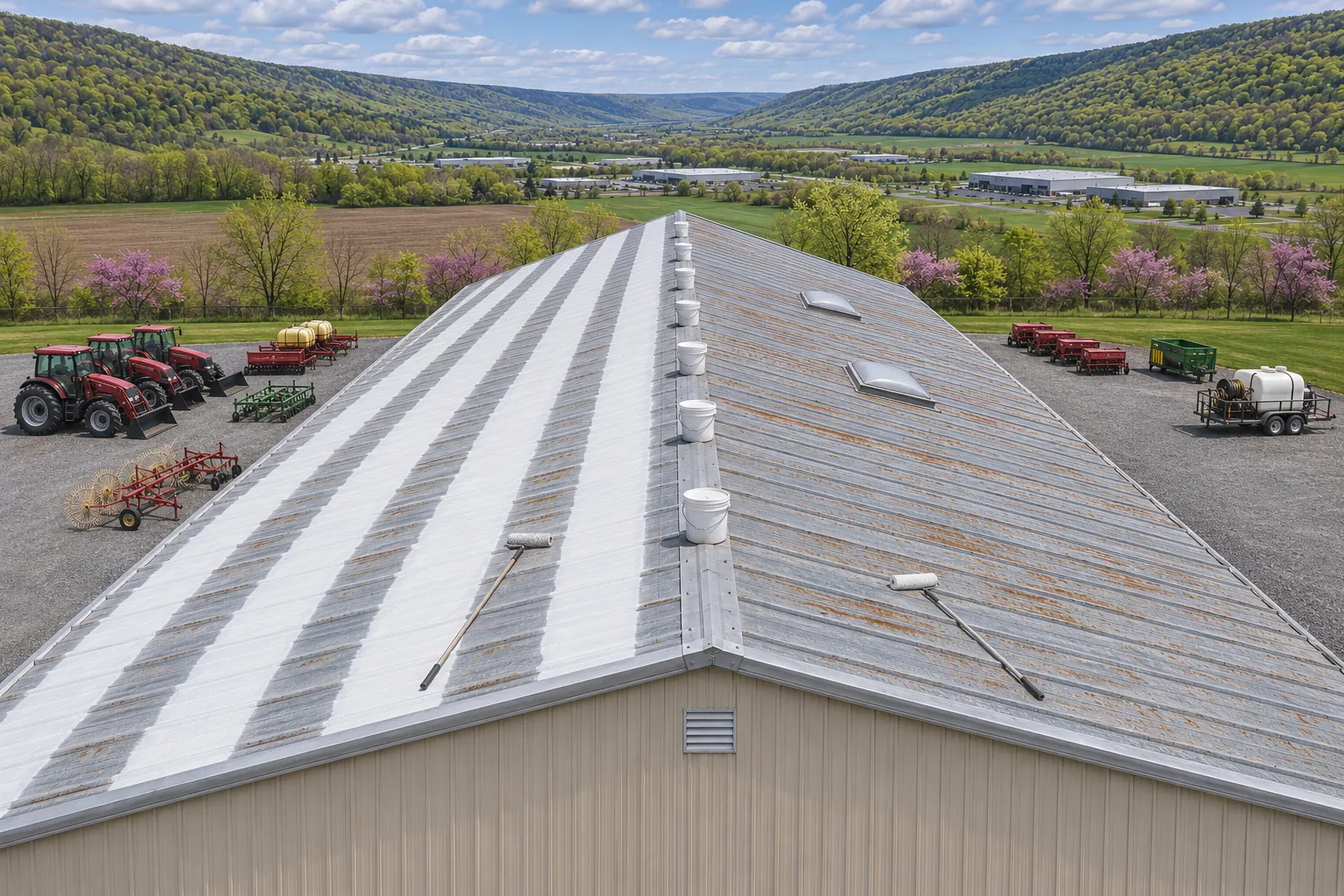
Side and end laps have opened with movement, snow load, or dried-out sealant.
Old sealant is cleaned out, new sealant goes in, and fabric bridges the lap before coating.
Bare steel at cut ends and scratches rusts first and stains the panel below.
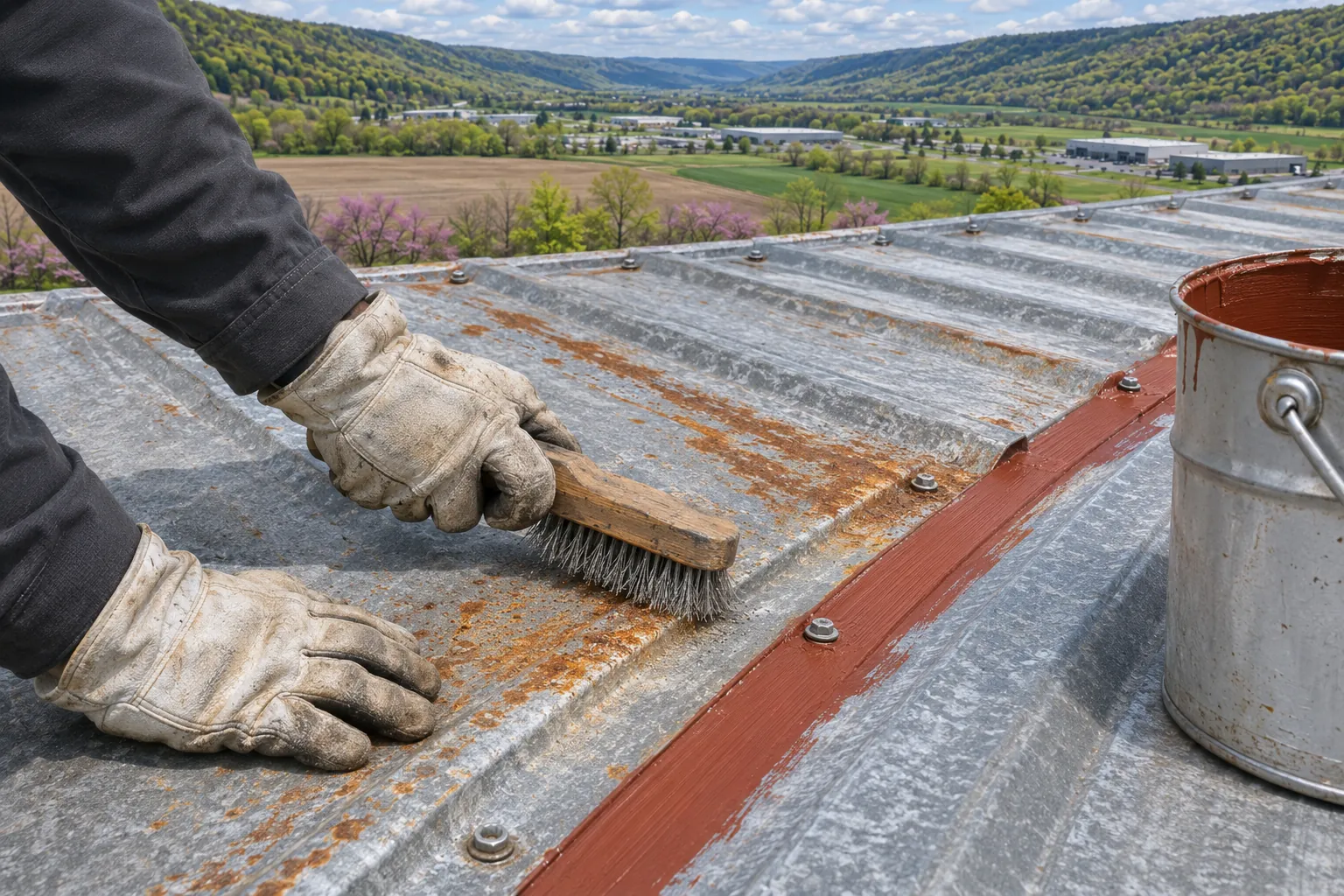
Edges are brushed to firm steel and primed with a rust-inhibiting primer.
Hail can dent the surface, loosen fasteners, or open seams near the impact.
We separate cosmetic dents from seam and fastening damage, and repair or replace the damaged pieces first.
Mounts, cable runs, and frequent visits concentrate traffic around rooftop equipment.
Flashing and deposits around the equipment are cleaned and repaired, and service routes get extra protection.
Several systems go over exposed-fastener steel. The panel finish, roof pitch, and maintenance traffic decide which one fits.
Water-based acrylic rolls or sprays over primed steel on roofs that drain quickly, with fabric at laps and a bright white finish.
Silicone handles areas that stay wet after rain, once outlets are clear and the primer passes an adhesion test.
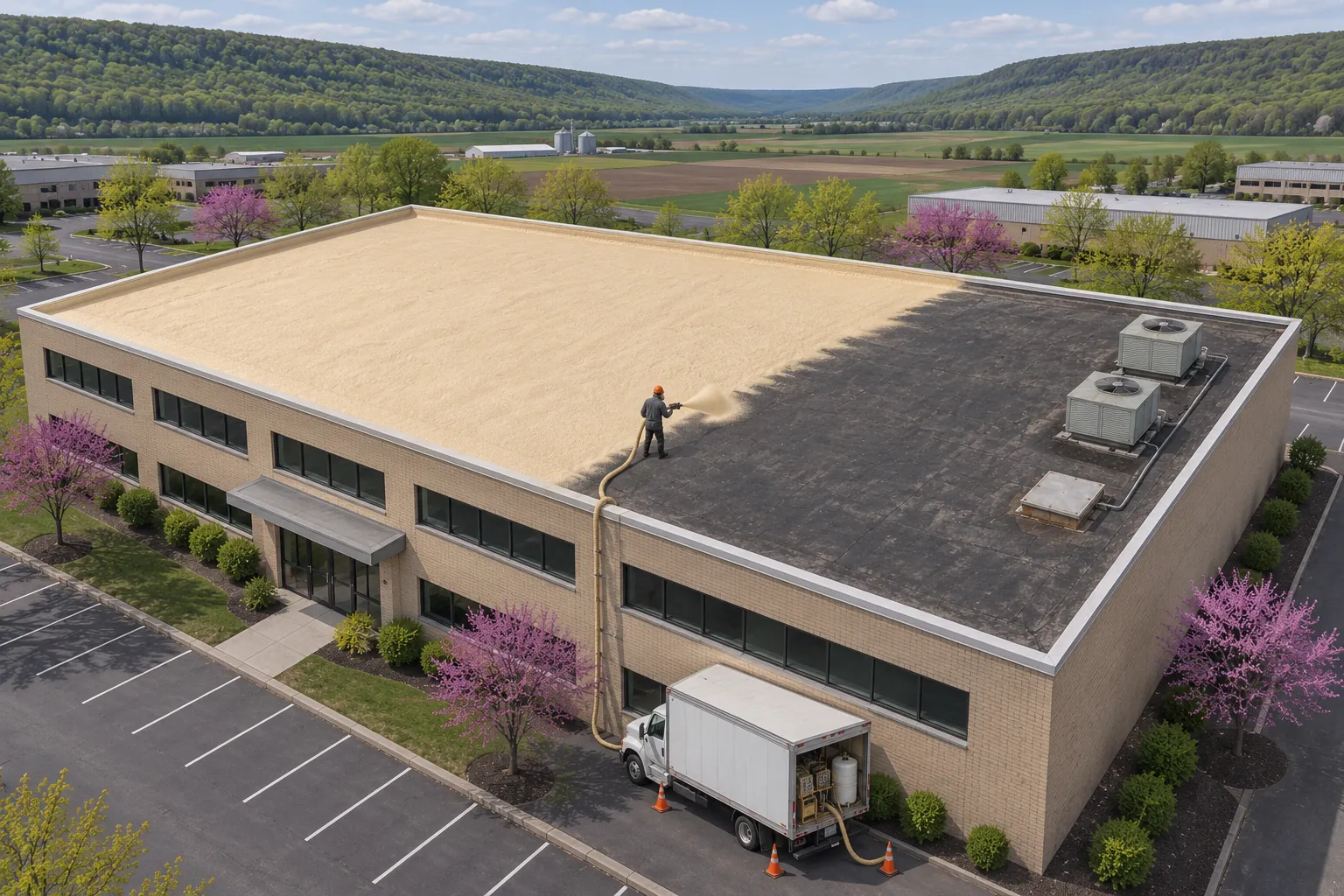
Foam fills over panel ribs and old details to add insulation, and a protective topcoat covers it.
Life depends on matching the system to the roof finish, exposure, and upkeep, and on the thickness the product sheet calls for.
Each benefit below depends on the repairs being done first. Coating protects steel that is still firm.
Hundreds of exposed screws each open a path for water once their washers fail.
Sealed heads under a continuous coating turn that line of small leaks into one protected surface.
Moisture held against bare spots lets rust spread under dirt and old paint.
Primer and coating keep firm steel drier, which slows new rust on the panels that stay.
Faded metal absorbs summer sun and passes heat into the space below.
A light coating reflects more of that sun, so the roof surface runs cooler on hot afternoons.
Removing panels opens the building to weather and stops work underneath.
Coating goes over the existing panels, so the shop, office, or barn stays in use section by section.

Fasteners that move get corrected before anything is sealed. Start with a ballpark range for coating your metal roof.
Get A Free Ballpark EstimateFive decisions, in the order we make them, take a metal roof from inspection to a cured coating.
We check corrosion, washers, holes, supports, laps, and the underside where reachable, and record every repair the roof needs.
Screws that still move are tightened or upsized so the sealing detail covers a stable attachment.
Hail damage to seams or fastening, and panels rusted through, are repaired or replaced before coating.
Finish, exposure, and maintenance around equipment decide the system, and its product sheet sets coats and thickness.
Primer, seam fabric, and coats go on in order, with extra material at curbs, edges, and penetrations.
Metal roofs often share a building with other roof types. These services cover the rest of the roof.
Flat sections beside a metal roof that hold rain after storms often take silicone once outlets are cleared.
Silicone Roof Coating in State College
Pitched metal that drains fast can take acrylic, with fabric worked into the screw rows.
Acrylic Roof Coating in State College
When the building needs insulation, foam fills over the panel ribs before its topcoat goes on.
Spray Foam Roofing in State College
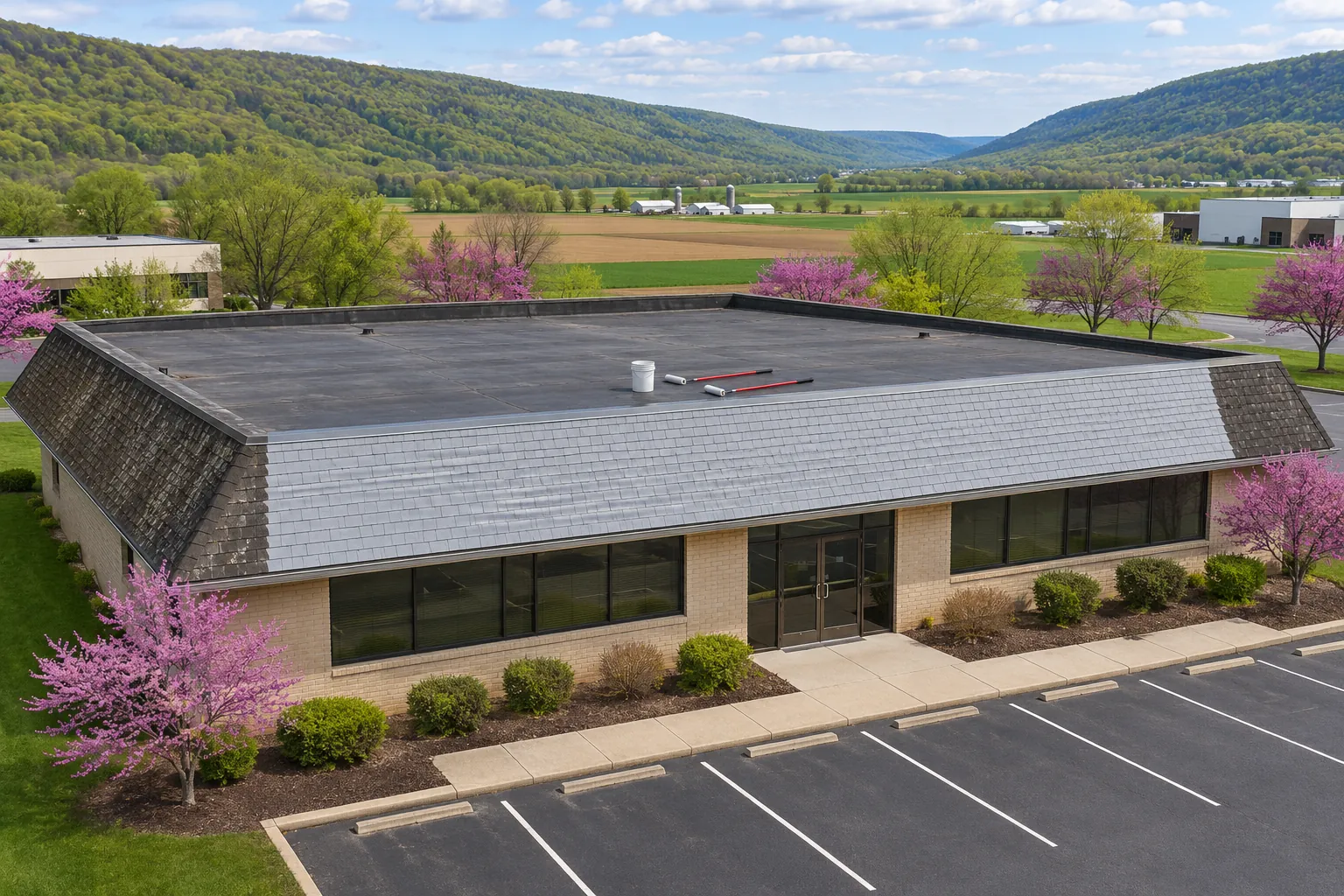
Office additions with shingle mansards get their own compatibility check before any coating.
Shingle Roof Coating in State CollegeThe right coating matches the panel finish, the exposure, and the upkeep around the equipment. We look at access routes, deposits, and flashing near the mounts first, since claims about the longest life tell nothing about compatibility with your roof.
Loose and defective connections are corrected first. Sealing a screw that still moves hides the evidence and leaves the coating bridging a defect it has no way to hold, so washers, holes, and supports are checked before any sealant goes on.
Only where the hail did more than dimple the surface. We check seams, fastening, and panel integrity, replace or repair what is damaged, and coat after that; a coating over impact damage proves nothing about the panels beneath it.
Usually a primer where rust or finish calls for it, then base and top coats that reach the dry thickness on the product sheet. Laps and screw rows get extra material and fabric before the field coats.
Yes, when the old paint still grips the steel. We scrape and test it; loose or flaking paint comes off to a firm edge before primer goes down.
Get a ballpark range from your roof area, or call to schedule an inspection of the screws, laps, and panels.