
Symptom
A Roof Covered In Old Patches
Likely Cause
Years of different repair products sit on the roof, some loose and some unknown.
What We Do
We identify the old materials, test their adhesion, and remove anything loose or incompatible.
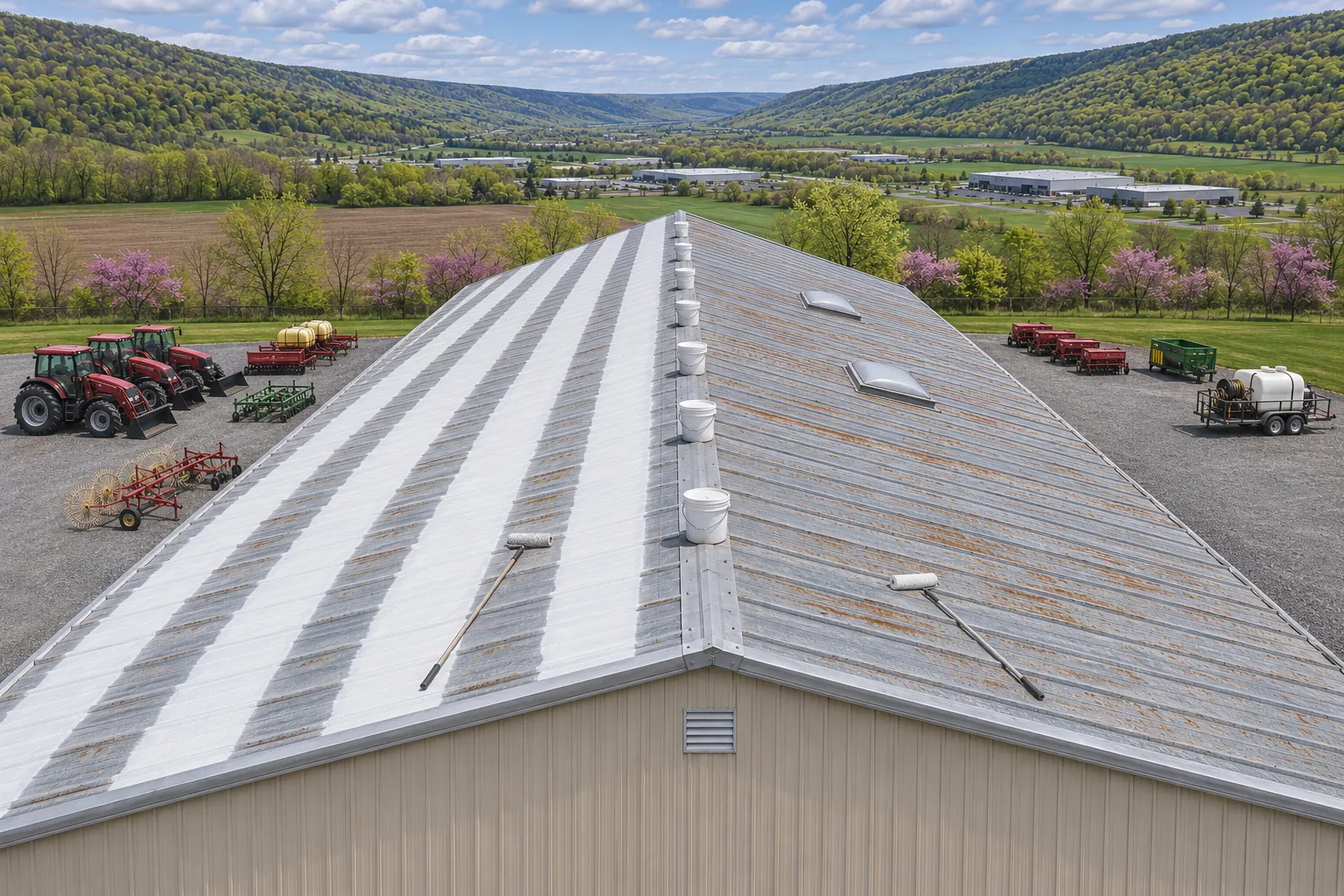
As a State College acrylic roof coating contractor, we reinforce seams, prepare old patches, and roll acrylic onto sloped commercial roofs during reliable cure weather.
State College acrylic roof coating suits roofs that drain quickly and have a stable surface. Check your roof against these rows.
| What You See | Coat Now | Repair, Then Coat | Choose Another Route |
|---|---|---|---|
| Sloped metal that sheds water within hours | Usually Fits | Sometimes | Rarely |
| Many earlier patches of unknown material | Rarely | Usually Fits | Rarely |
| Loose or lifting patches at seams | Rarely | Usually Fits | Rarely |
| Water standing for days in flat areas | Rarely | Sometimes | Usually Fits |
| Firm older acrylic that has chalked | Usually Fits | Rarely | Rarely |
Choose Another Route on ponding areas usually means silicone or a drainage fix before any acrylic.
These are the signs that set the prep work on an acrylic job. Old patches and seams come up most.
Years of different repair products sit on the roof, some loose and some unknown.
We identify the old materials, test their adhesion, and remove anything loose or incompatible.
Field panels were coated but seams were left without reinforcement.
Seams get their own preparation and fabric so joint work and field coats both do their part.
Rain or dew reached the acrylic before it dried.
Application dates follow surface temperature, humidity, and the forecast together.
Shaded metal stayed cold and damp while warmer sections dried.
The work window is set for the whole roof, including the north slope and details.
An older coating has weathered but still grips the roof.
The surface is washed and tested, and new acrylic goes over the firm layer.
Acrylic works best on sloped, fast-draining roofs. These cards compare it with the other systems we apply.
Rolled or sprayed acrylic covers pitched panels, with polyester fabric bedded in laps and screw rows.
Areas where water stays for days take silicone instead, once the drainage cause is addressed.
Firm acrylic layers take a fresh acrylic coat later after washing, which keeps future recoats simple.
Spray foam adds insulation, and an acrylic topcoat protects it on roofs that drain well.
Acrylic fits roofs that shed water fast. These pairs show what it corrects once prep is done.
Weathered metal soaks up sun and heats the space beneath.
A white acrylic finish reflects much of that sunlight off the roof surface.
Laps and screw rows open with daily temperature swings.
Fabric-reinforced seams under the acrylic close those joints along with the field.
Old tape and mastic repairs age at different rates and peel apart.
Prepared patches under a single acrylic system give the roof one consistent surface.
Uncoated spots on metal rust each time they stay damp.
Primer and acrylic cover cleaned steel so it stays drier between storms.
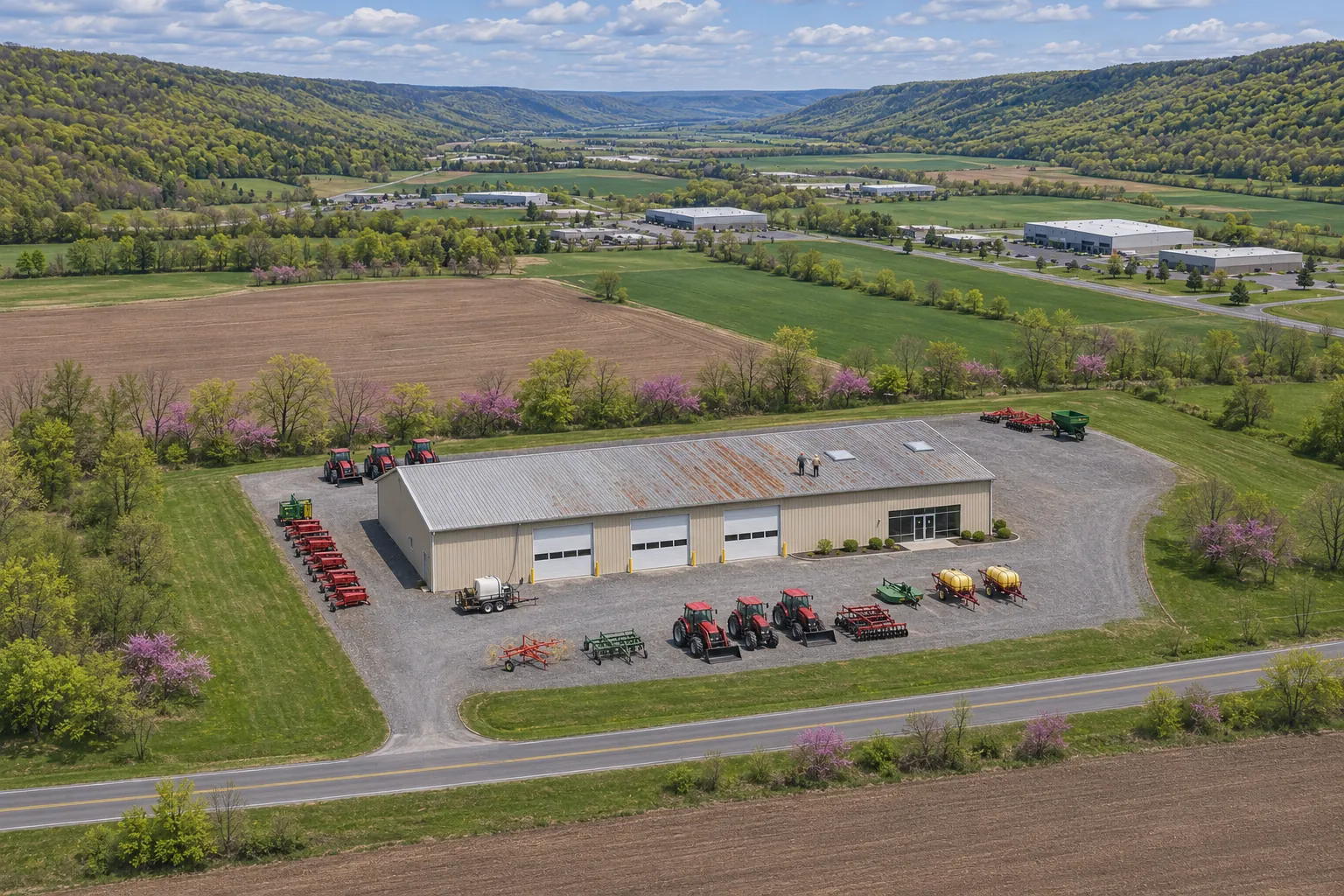
Years of repairs need sorting before acrylic goes on. Start with a ballpark range from your roof size.
Get A Free EstimateFive decisions take an acrylic job from inspection to a cured surface.
We check drainage, panel condition, seams, and every old patch, and test how well each existing material holds.
Loose and unknown repair products are removed so the acrylic sits on a compatible, firm base.
Laps and screw rows get their own preparation and fabric as the selected system requires.
Surface temperature, humidity, and the forecast must allow drying and cure across the whole roof.
Coats build to the finished thickness the system sets, with details completed before the field.
Acrylic often covers one part of a building. These services handle the parts it suits less.
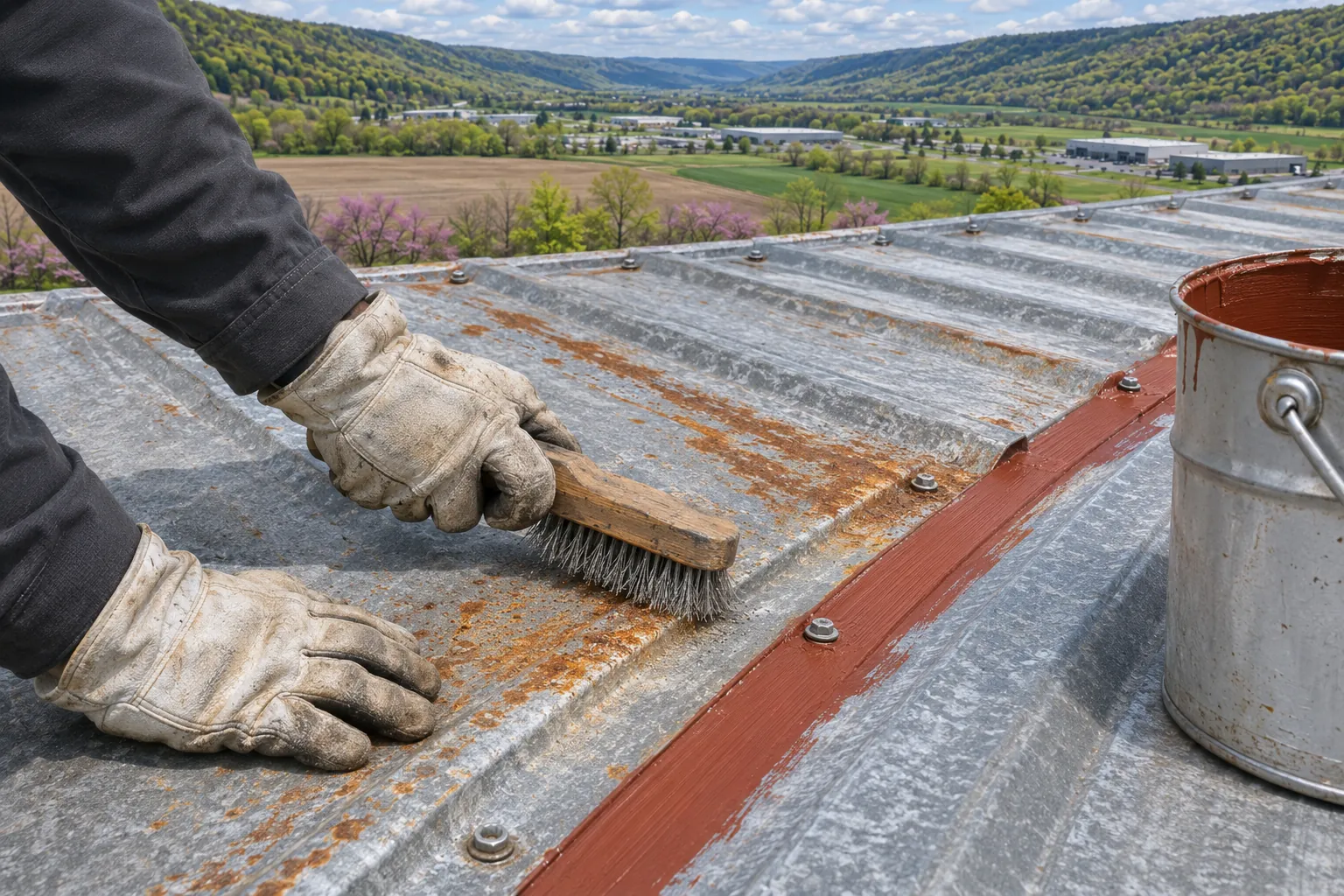
Exposed-fastener steel under the acrylic needs screws, laps, and rust handled first.
Commercial Metal Roof Coating in State College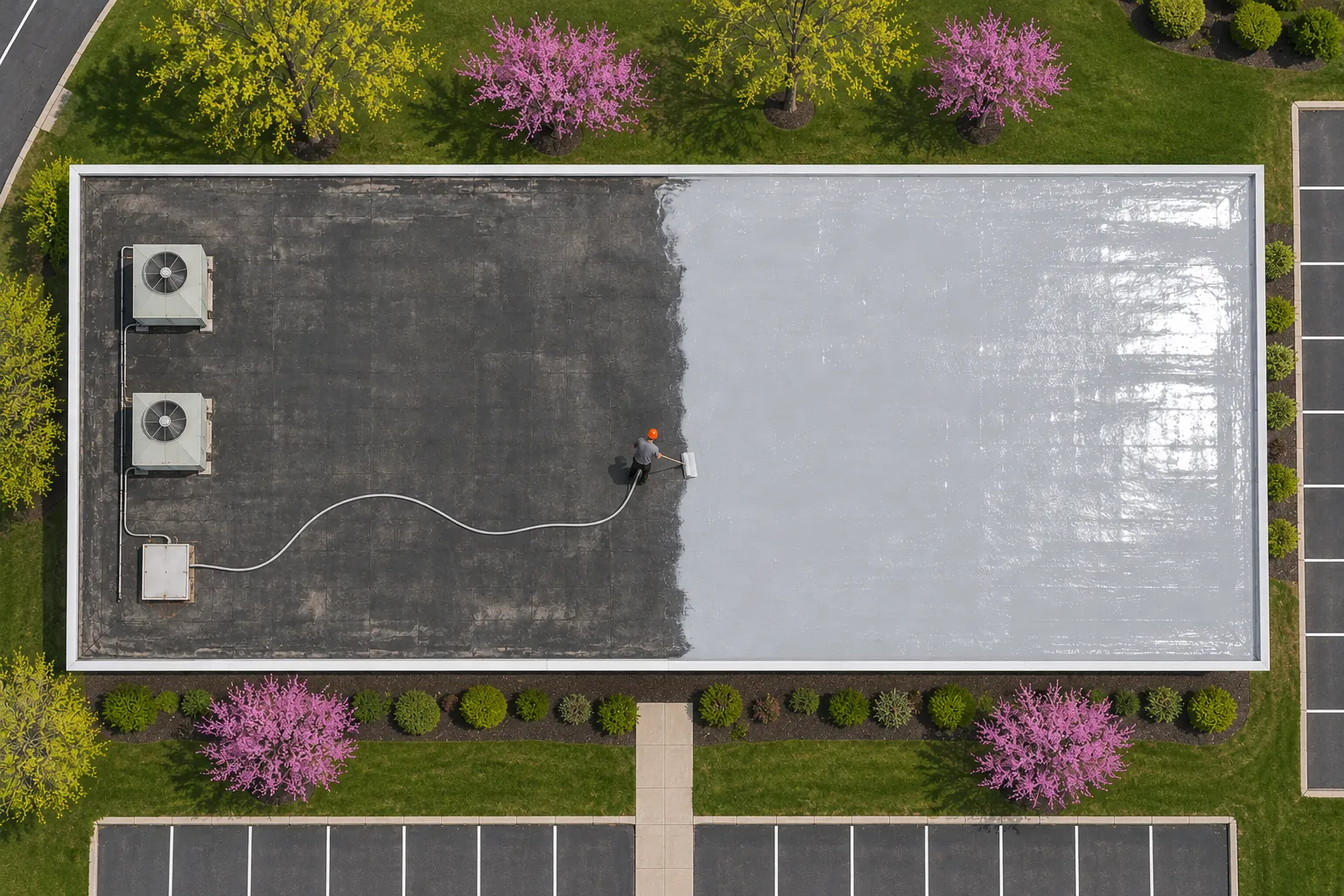
Flat sections that pond get silicone, divided from the acrylic area by a planned joint.
Silicone Roof Coating in State College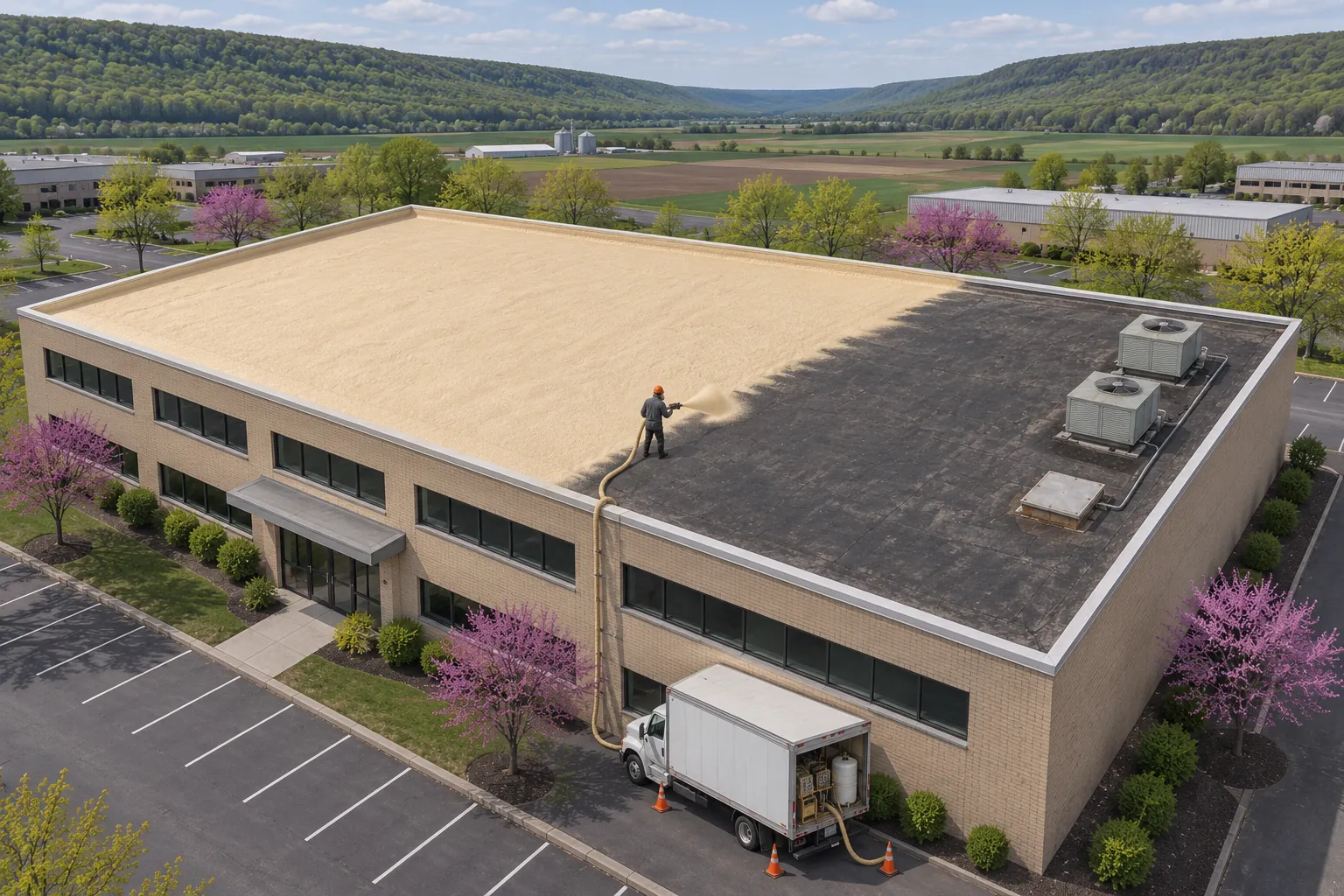
Buildings that need insulation can take foam first, with acrylic as its topcoat.
Spray Foam Roofing in State College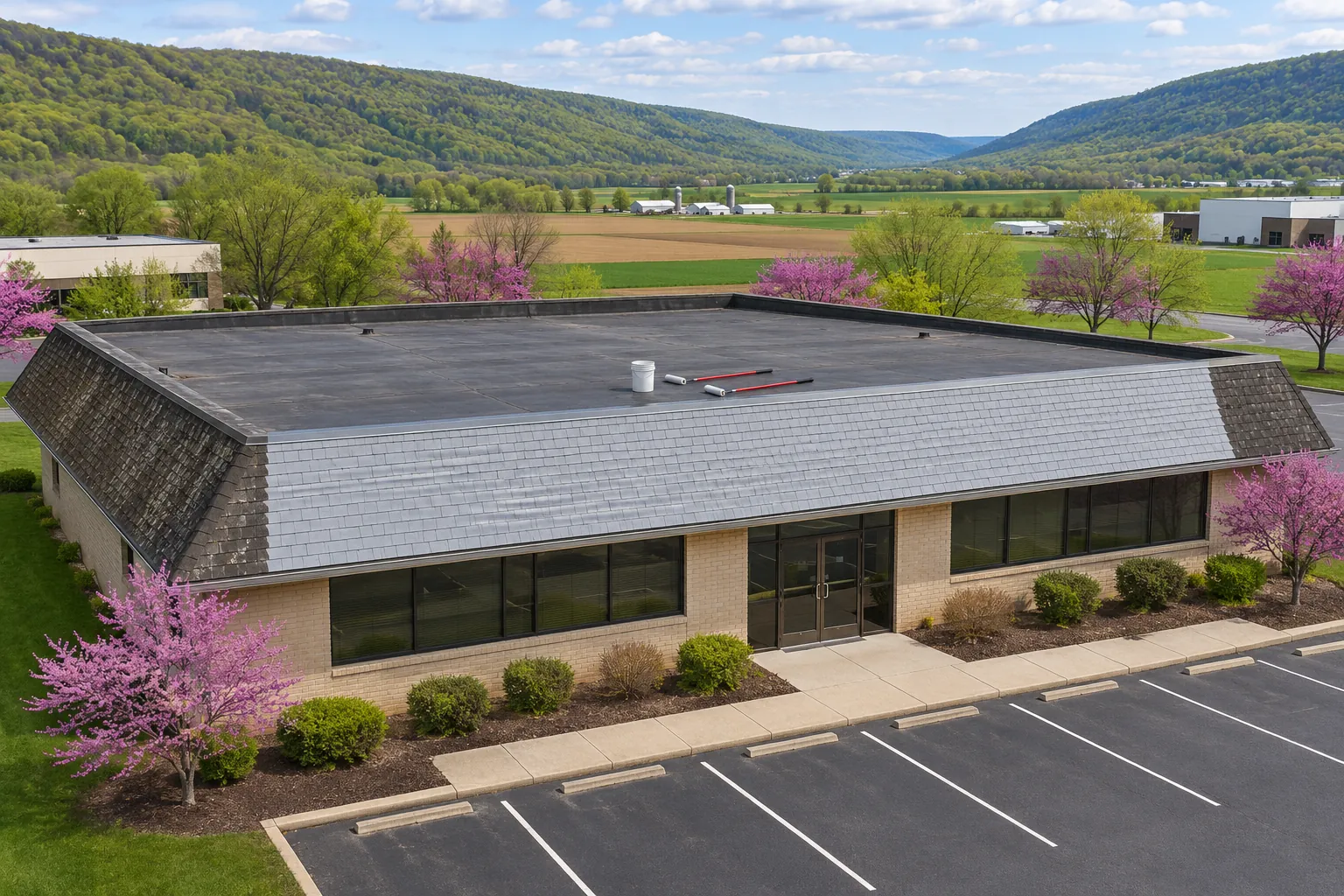
Shingle faces nearby get a separate check against the shingle maker guidance.
Shingle Roof Coating in State CollegeCoat count alone leaves out the work. Seams and field panels can need different preparation and reinforcement inside one acrylic system, so we follow its requirements for details and finished thickness; a well-covered panel still leaks beside an untreated seam.
It can, once the old patches are prepared into a compatible, firm base. We identify each repair product and test its adhesion, and loose or unsuitable patches are dealt with first so the new acrylic covers known layers.
Spring and fall temperatures decide whether acrylic dries and cures inside the product limits. We weigh surface temperature, humidity, and the forecast together, since shaded metal and detailed areas dry more slowly than the warmest open section.
Acrylic needs dry hours after application before rain or dew reaches it. The product sheet sets the time for the temperature and humidity on that day, so we pick dates with a clear stretch in the forecast.
In most cases it will not bond. A silicone roof keeps silicone recoats, so we check what the old coating is before picking acrylic.
Fresh acrylic can wash or blush if rain or heavy dew reaches it before it dries. We check the hourly forecast before each coat, stop early when clouds build over the ridges, and inspect any affected area the next dry day so damaged film is removed and recoated before the next layer.
Rusted steel gets a rust-inhibiting primer chosen to work with the acrylic system on top. We clean the rust to firm metal, prime those areas, and let the primer cure for the time its data sheet sets before the first acrylic coat rolls over the panels.
Get a ballpark range from your roof size, or call to have seams and old patches checked first.