
Symptom
Roof Drainage Checks Before Coating
Likely Cause
Leaves and debris have blocked outlets, so water backs up across the section.
What We Do
Outlets and strainers are cleared and checked before any coating goes on.
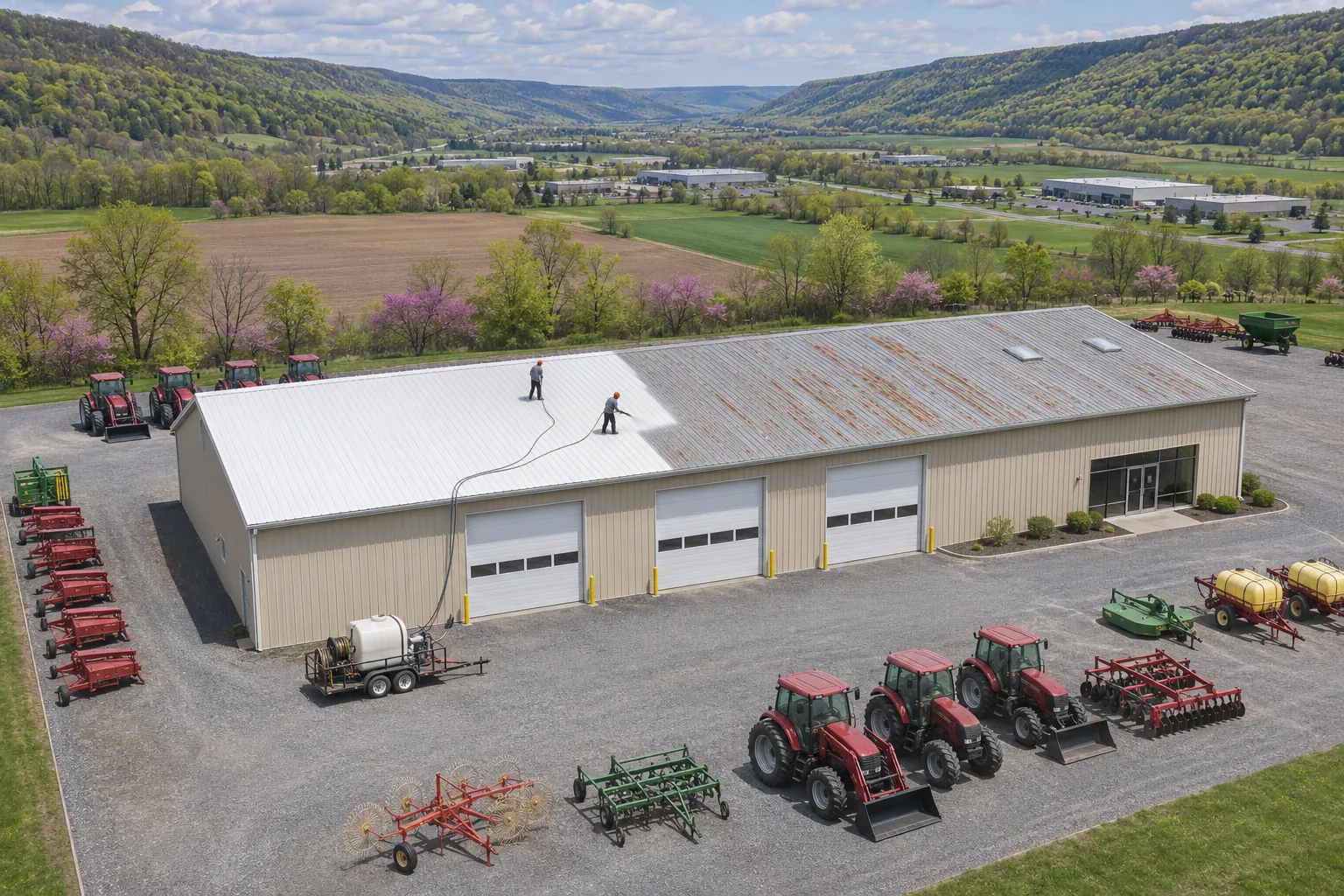
As a Punxsutawney metal roof coating contractor, we trace runoff, clear outlets and gutters, and coat retail roofs once every tenant section drains.
Punxsutawney metal roof coating on a retail building starts with where the water goes. Runoff from one tenant section often crosses into the next, and a single blocked outlet can pond water over two shops. We trace drainage across every section and fix restrictions first, so the coating covers the roof as it really performs.
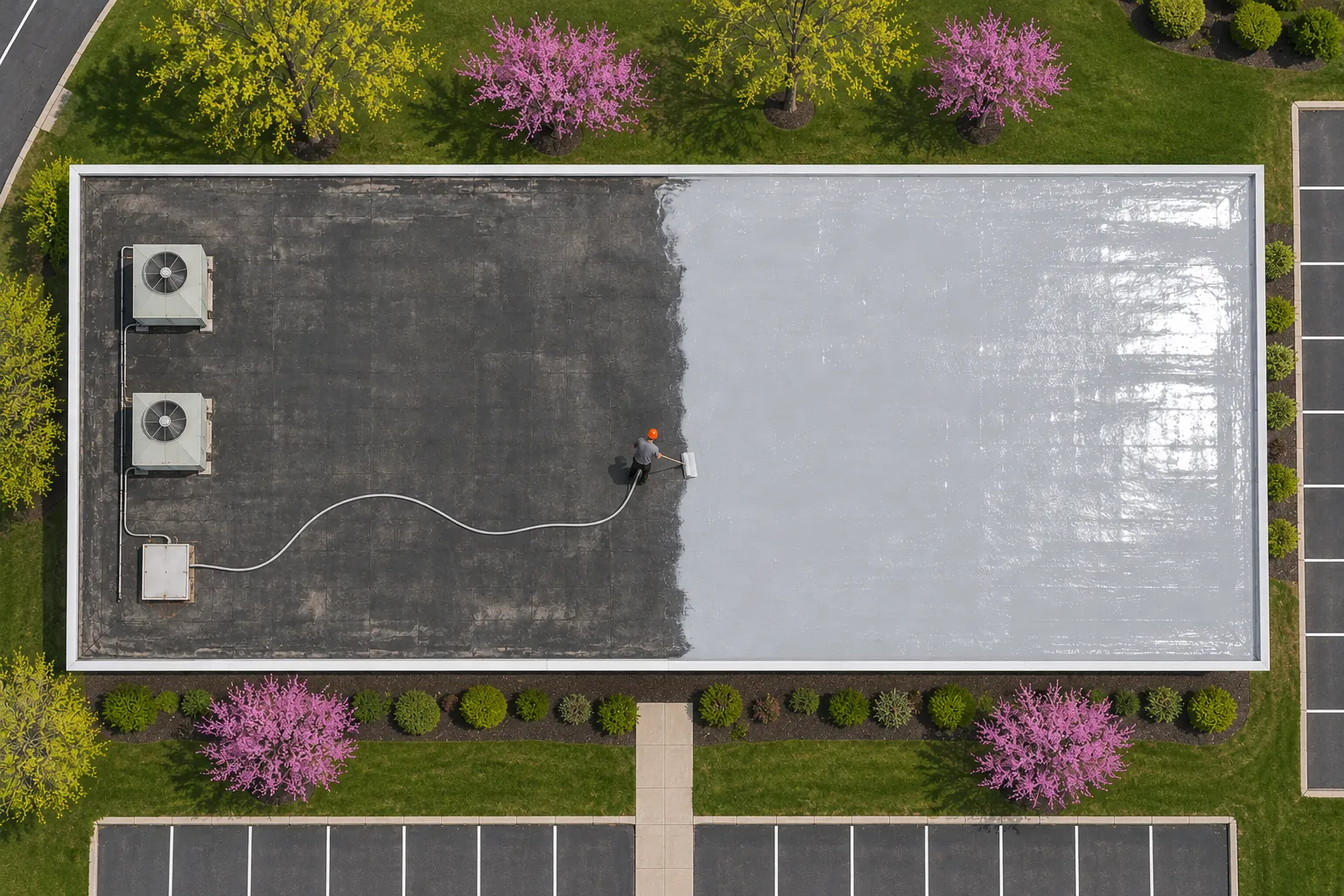
Water problems on retail roofs usually start at an outlet or a transition. These rows trace the most common ones.
Leaves and debris have blocked outlets, so water backs up across the section.
Outlets and strainers are cleared and checked before any coating goes on.
Ice and debris have bent or clogged the gutter line.
Gutters are cleaned, straightened, and resealed where they meet the roof edge.
Transitions between tenant sections sit lower and hold water.
We assess the transition and correct the slope or flashing before coating.
Water from one section crosses into the next along the deck.
The source section is found by tracing stains and runoff, and its detail is repaired.
Melting snow refreezes at cold edges and backs water under laps.
Edge laps are resealed and the gutter connection is detailed again.
Scupper boxes through parapet walls have cracked at their seams.
Scuppers are resealed or replaced and reinforced before coating the roof field.
Once the drainage works, coating protects every tenant section with one surface.
Areas around outlets stay wet longest and wear their coating first.
Reinforced coating at outlets and scuppers handles the most water exposure.
Water entering over one store travels and stains a neighbor ceiling.
A continuous coating across sections closes those entry points together.
Transitions between building sections move apart with temperature.
Detailed joints under the coating keep runoff on the roof surface.
Weathered panels look tired from the parking lot and run hot in summer.
A fresh light coating improves the look and reflects more sun.
Ice loads bend gutters and pull at the roof edge where they attach.
Edges are resealed and coated with fabric so the joint holds through the next winter.
Retail roofs in Punxsutawney mix sloped metal and flat sections. These options follow the drainage.
Sections that still hold shallow water after outlet repairs take silicone.
Metal sections that shed water quickly take acrylic with fabric at laps.
The joint between roof edge and gutter gets fabric and extra coating.
Each outlet and scupper is built up with fabric before the field coats.
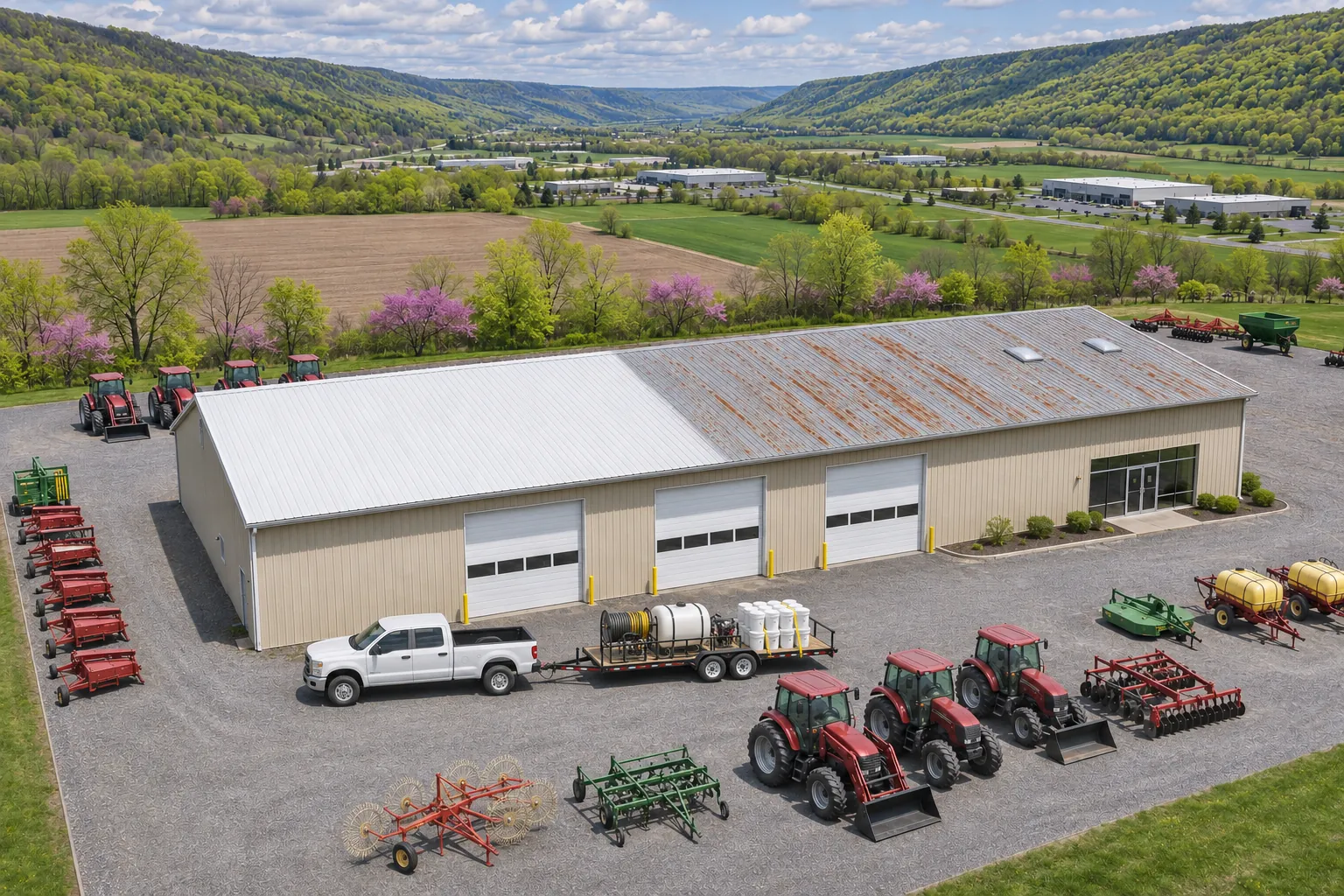
An overflowing gutter often means water is backing up on the roof too. Start with a ballpark range for coating.
Get A Free Ballpark EstimateFour decisions take a retail roof from a drainage check to a finished coating.
We trace runoff across tenant sections and inspect outlets, gutters, transitions, and low areas.
Blocked outlets, bent gutters, and low transitions are corrected first.
Sections that still pond take silicone; sloped metal takes acrylic, joined at a planned edge.
Outlets and gutters get reinforced detail work before the field coats go on.
Store outside Punxsutawney? Call us or send us a message. We take coating jobs in these towns and in State College as well.
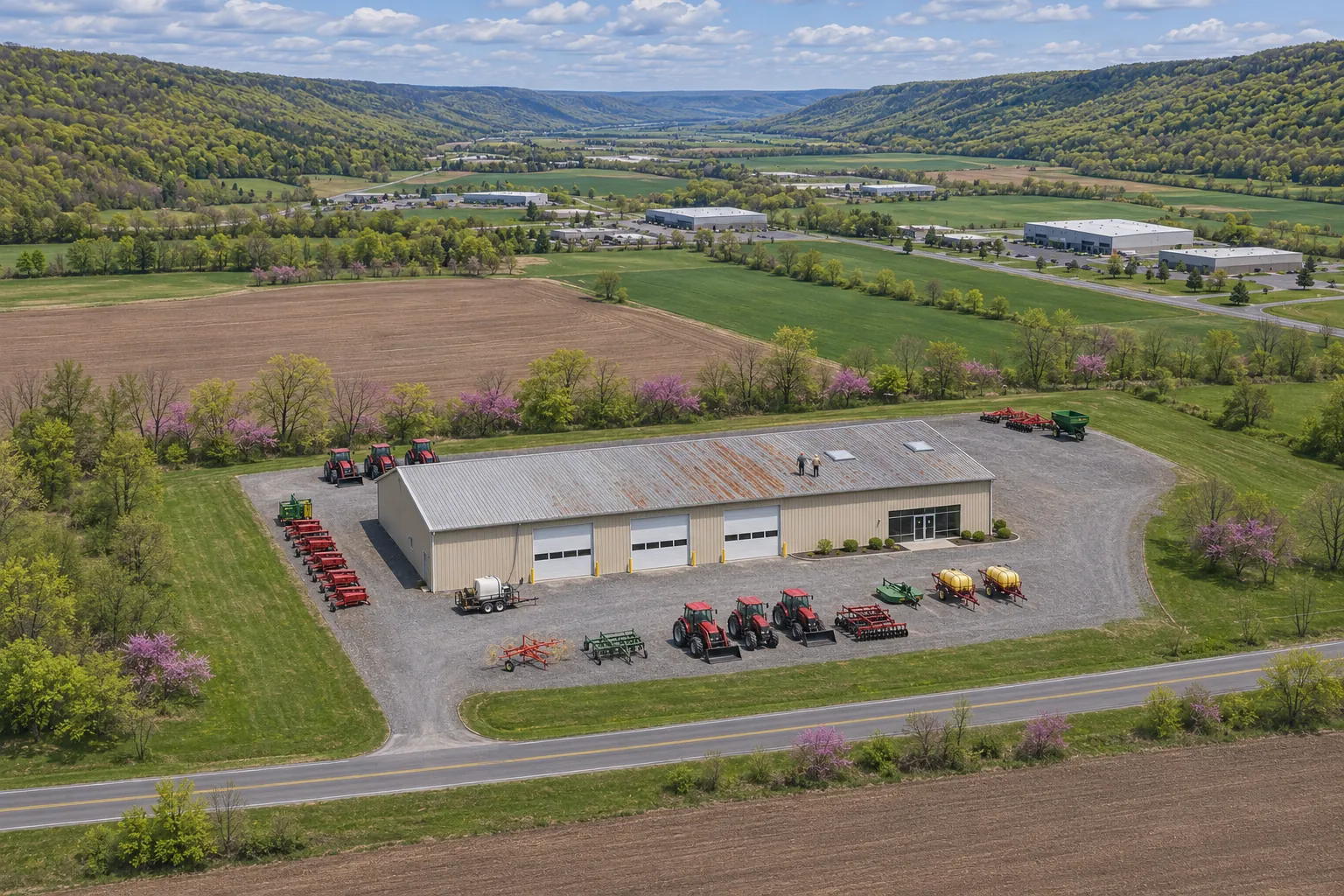
Retail roofs scoped around each tenant equipment zone.
Farm roof panels checked from below for condensation.
Office roofs worked around instrument mounts and cables.
Older coatings adhesion-tested before any recoat.
Have outlets, gutters, and low areas reviewed first, so the coating fits how water actually moves on the roof. We trace runoff across tenant sections and check transitions that hold water, and correcting those restrictions comes before the restoration scope.
Plan around $2.50 to $4.00 per square foot to coat and about $5 to $8 to replace. Drain and gutter repairs, slope corrections at transitions, and coating separate sections add to a retail roof price.
Punxsutawney, the nearby towns listed below, and State College. Call us with the address if your building sits between them.
Yes, with a planned joint between them. Each system keeps its own primer and recoat path.
Check drains in fall after the leaves drop and again in spring after the thaw. Cleared outlets before coating keep the new surface from sitting wet.
Coating seals the roof edge, but it leaves the ice itself in place. Clear gutters, working downspouts, and sealed edge laps reduce how often meltwater backs up, and we check those details each spring after the thaw.
Usually they are scheduled as one job in two stages. Drain and gutter repairs come first and get a rain to prove them, then coating follows once the sections drain as they should.
They do. A downspout that backs up fills its gutter, and the water then sits at the roof edge. We check each downspout runs clear to the ground or storm line as part of the drainage review before coating.
A walk after a hard rain shows where water still sits and which outlets run slow. We mark those spots, and the marks guide the repairs and the extra coating thickness around drains before the job is priced.
Get a ballpark range for the store roof, or call to have the drainage checked first.