
Symptom
Condensation Under Metal Roof Panels
Likely Cause
Warm, humid air from animals, grain, or wash water meets cold steel and drips.
What We Do
Ventilation or insulation gets its own plan, and the coating handles only the exterior defects.
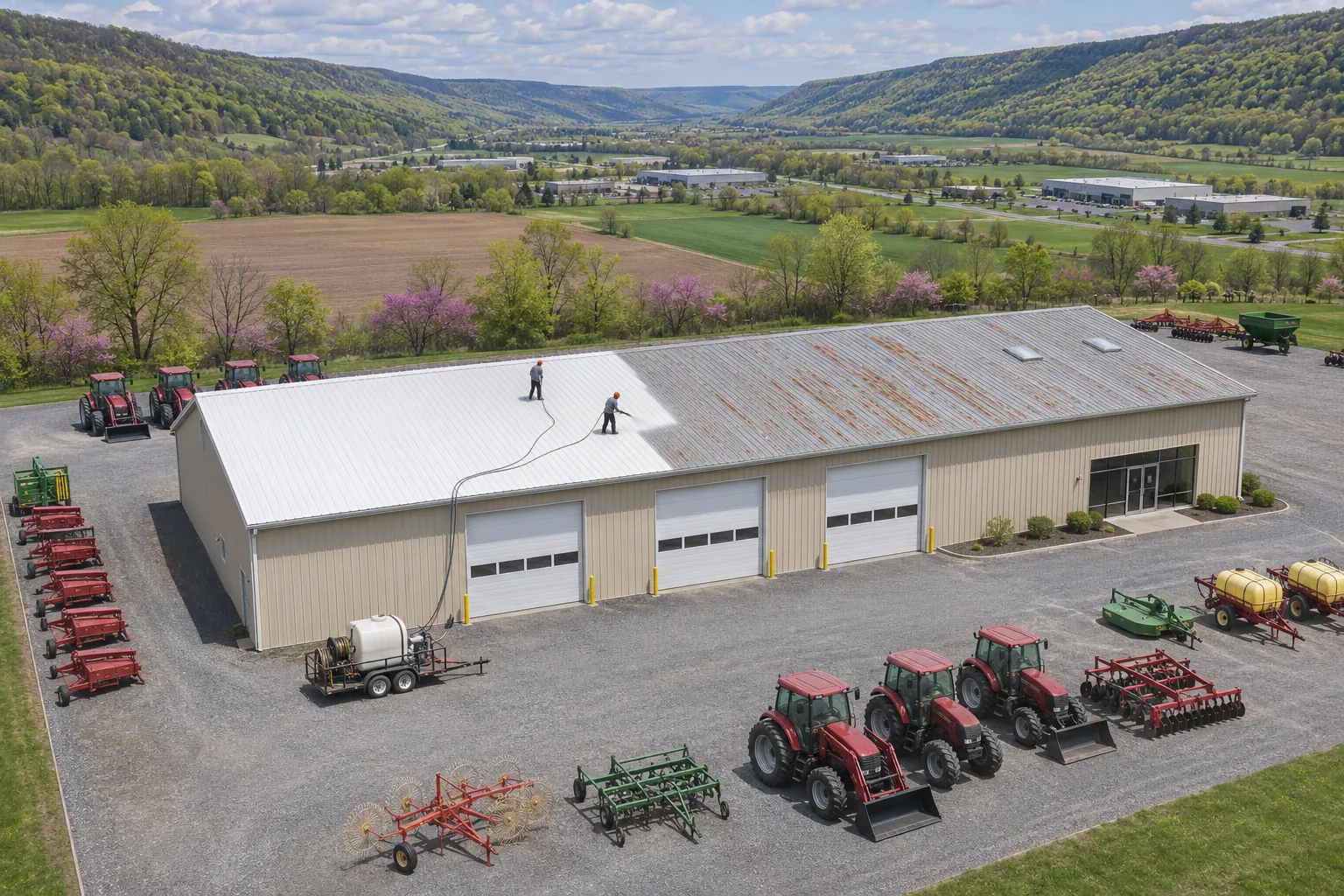
As a Lewistown metal roof coating contractor, we check panel undersides, fix screws and laps, and coat metal roofs on farm shops, barns, and equipment dealers.
Lewistown metal roof coating on farm buildings begins underneath. Livestock, stored grain, and wash bays put moist air against cold steel, and the rust or drips it causes can look like a roof leak.
We compare what we see below the panels with the exterior before recommending a coating, so the outside work never hides a problem that starts inside.
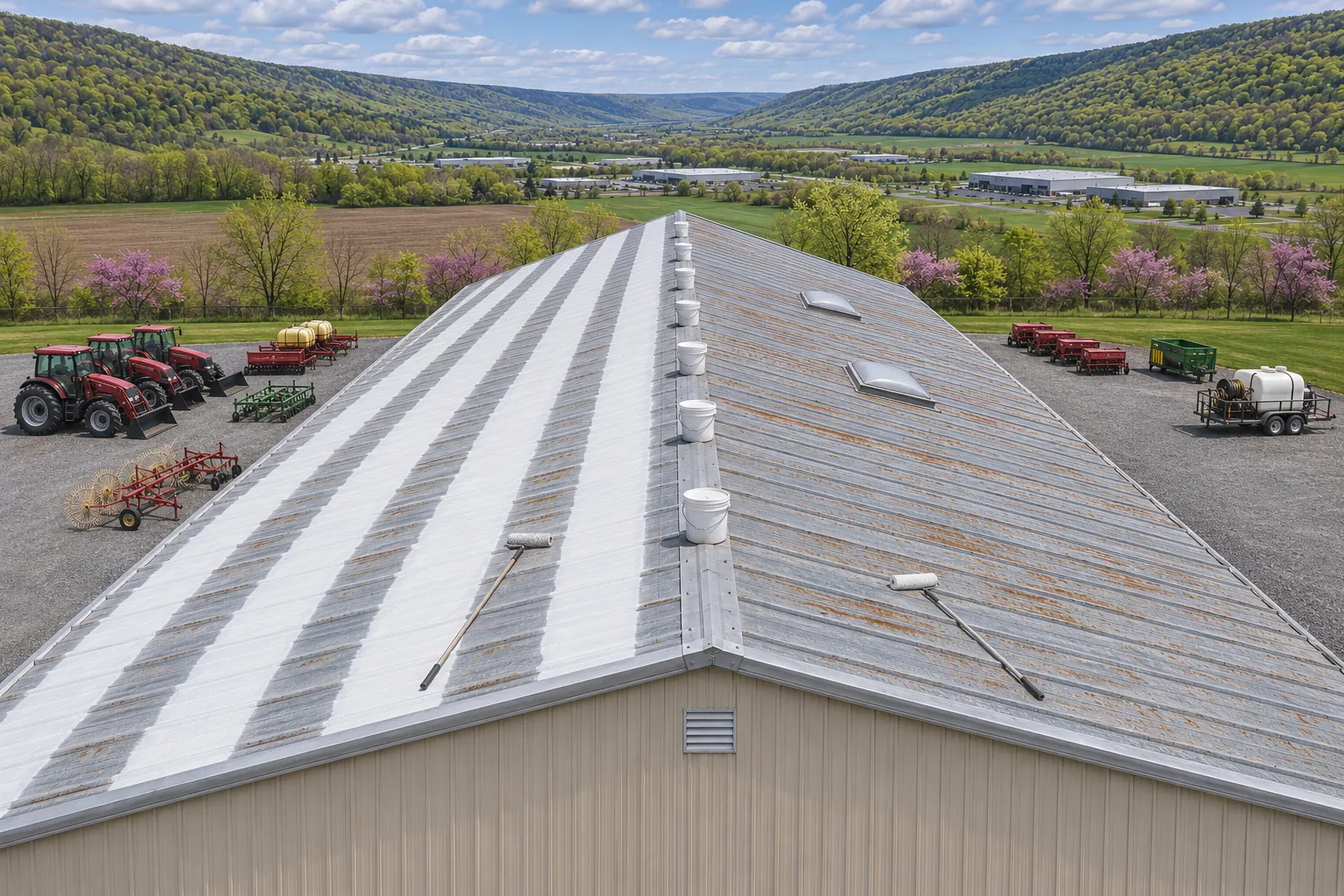
On farm buildings, the source of water is not always the roof surface. These rows sort the causes before coating.
Warm, humid air from animals, grain, or wash water meets cold steel and drips.
Ventilation or insulation gets its own plan, and the coating handles only the exterior defects.
Moisture held on the inside face corrodes panels from below.
We gauge how far the rust has gone and replace panels that have lost their strength.
Washers have aged and screws have loosened as framing moves.
Screws are tightened or upsized with new washers before sealing.
Feed dust, fertilizer, and exhaust settle on the panels.
The roof is washed and dried so primer and coating can bond.
Long open bays let wind pressure work at panel laps.
Laps are refastened, sealed, and reinforced with fabric.
Vent caps on barns and shops corrode faster than the panels around them.
Corroded vents are replaced or reflashed so the coating ties into sound metal at the ridge.
Coating a farm building roof pays off when the exterior is the problem and the panels are still firm.
Leaking screw rows drip onto machinery, seed, and feed below.
Sealed fasteners under the coating stop those exterior leaks over the work area.
Weathered panels rust on top where the old finish has worn away.
Primed and coated steel stays drier on the weather side between storms.
Bare panels heat the shop space where people work.
A light coating reflects more sun and keeps the roof surface cooler.
Pulling panels off a barn interrupts work and exposes what is stored inside.
Coating goes over the existing roof, so the building stays in use.
Long open-sided buildings let gusts work at the panel laps every storm.
Refastened laps under fabric and coating hold the panels together along each run.
Farm roofs in and around Lewistown are mostly pitched metal. These options fit most of them.
Acrylic with fabric at laps and screw rows suits gabled barns and equipment shops that drain quickly.
Shops that are heated through winter can take foam over the panels, as part of a moisture plan.
Panels rusted through from below are replaced with matching profiles before any coating.
Ridge and wall vents are protected during coating so air keeps moving through the building.
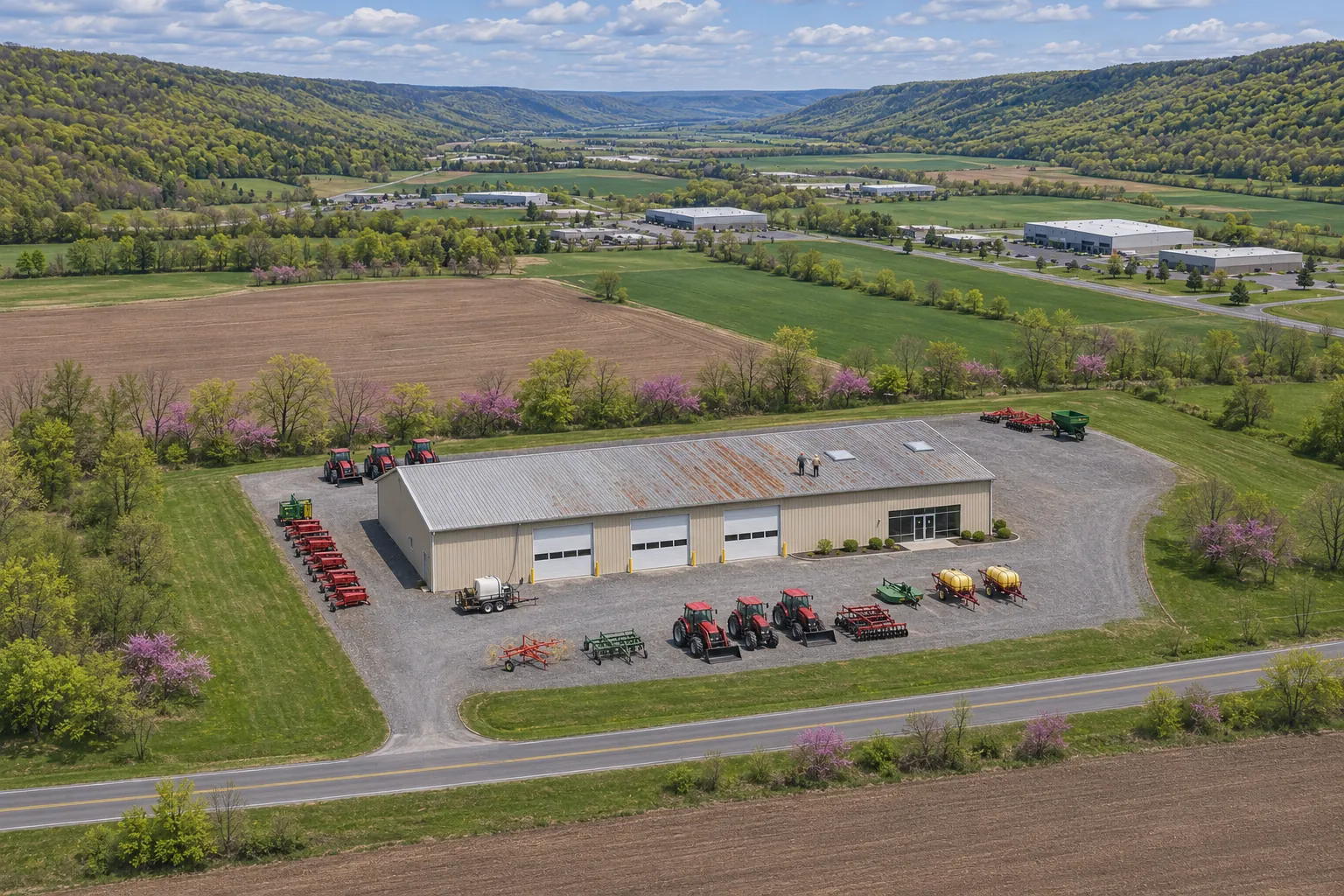
Morning drips can be condensation instead of a roof leak. An inspection tells them apart; start with a ballpark range.
Get A Free EstimateFour decisions set up a farm building job, beginning inside the building.
We look at the underside where accessible and then the exterior, comparing rust, drips, and stains on both faces.
Condensation and roof leaks are separated, and each gets its own fix.
Firm panels are cleaned and primed; panels weakened from below are replaced.
Dry steel and cure temperatures decide the dates, worked around harvest and equipment schedules.
Farm or shop outside Lewistown? Call us or send us a message. We also coat roofs in the towns listed here and State College.
Retail roofs scoped around each tenant equipment zone.
Office roofs worked around instrument mounts and cables.
Older coatings adhesion-tested before any recoat.
Tenant drainage traced across every section first.
Yes, wherever the underside is reachable. Corrosion or condensation often shows below the metal first, and we compare those findings with the exterior before recommending a coating, so outside work never covers a moisture problem that starts inside the building.
Coating runs about $2.50 to $4.00 per square foot in our planning range, against about $5 to $8 for replacement. On farm roofs, rust from below, panel swaps, screw replacement, and washing off residue move the figure most.
It will not. An exterior coating covers the weather side; condensation comes from humid air meeting cold steel inside, which takes ventilation or insulation work.
Dates are planned around harvest and equipment movement, and coating waits for dry steel and cure temperatures that hold overnight.
Open sides let wind work at laps and edges. We refasten and reinforce those laps and check the edge trim before coating.
Most pitched barn roofs take acrylic over prepared steel, since they drain fast. The bigger question with livestock is ventilation, because animal moisture condenses under cold panels; we flag that during the inspection so the coating and the airflow plan are handled together.
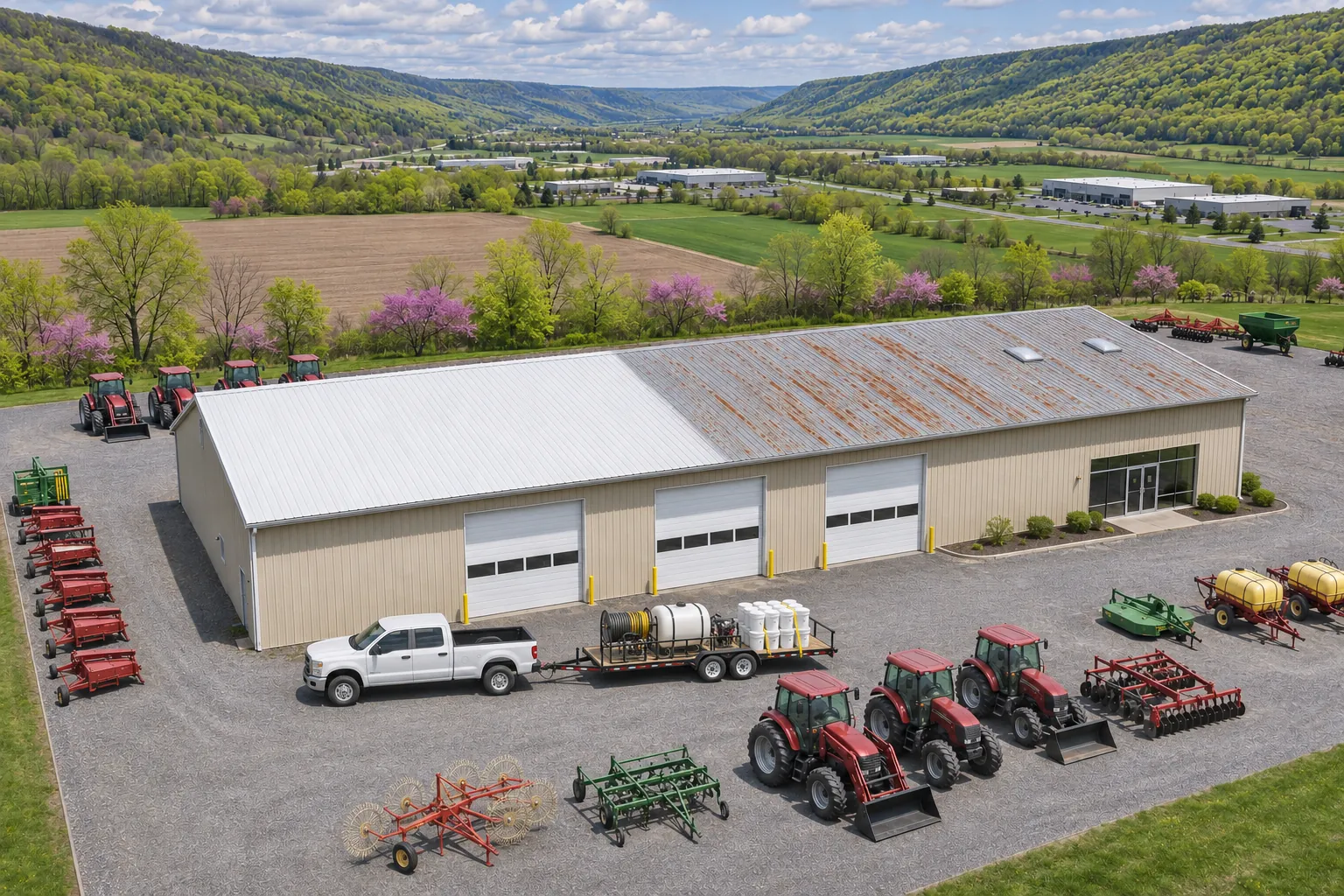
We do. Dealer buildings often pair a metal service shop with a flat or shingled showroom roof. Each section gets the system that fits its slope and drainage, and the work is staged so the lot and service bays stay open.
Often, when the rust sits on the surface and the steel stays stiff. Panels rusted through from below are swapped for matching profiles, the rest are cleaned and primed, and the coating covers the whole roof once the screws and laps are fixed.
Get a ballpark range for your barn or shop roof, or call to set up an inspection inside and out.